
Does Psoriasis Affect the Joints? Understanding Psoriatic Arthritis

Table of Contents
- The Skin-Joint Connection: How Psoriasis Impacts Your Musculoskeletal System
- Early Warning Signs of Psoriatic Arthritis
- The Ayurvedic Perspective on Psoriatic Arthritis
- Natural Ways to Treat Psoriatic Arthritis: A Holistic Clinical Approach
- When to Seek Professional Guidance
- Frequently Asked Questions (FAQs)
Over the past two decades of clinical practice, I have sat across from hundreds of patients who came into my clinic believing they were dealing with two completely unrelated health problems. On one hand, they had been managing dry, scaly, red skin patches on their elbows, scalp, or knees for years.
On the other, they had recently started waking up with stiff, aching fingers, a throbbing lower back, or a swollen knee that seemed to appear out of nowhere.
When I connect those two dots for them, the reaction is almost always a mix of surprise and relief.
If you are living with psoriasis and have begun noticing unexplained stiffness, swelling, or deep joint pain, you are not imagining things, and it is not simply “getting older.” Psoriasis does not stop at the surface of the skin. In a significant number of individuals, the very same underlying immune dysfunction that triggers rapid skin cell turnover can also target the joints, tendons, and ligaments a chronic inflammatory condition known as Psoriatic Arthritis.
At Vedam Ayurveda, my goal as a physician is to help you understand the root cause of what your body is experiencing so you can intervene early, protect your mobility, and pursue sustainable, long-term relief.
The Skin-Joint Connection: How Psoriasis Impacts Your Musculoskeletal System
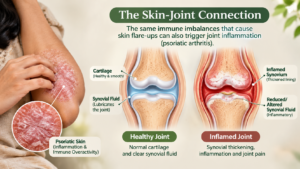
To understand Psoriatic Arthritis (often abbreviated as PsA), it helps to first understand what psoriasis actually is. Many people view psoriasis purely as a dermatological issue, yet modern medicine and classical Ayurveda both recognize it as a systemic, immune-mediated condition.
In psoriasis, an overactive immune system sends faulty signals that accelerate the growth cycle of skin cells, causing them to pile up rapidly on the surface as silvery scales and inflamed plaques. When this systemic inflammation extends beyond the skin and begins attacking healthy joint tissues, it develops into Psoriatic Arthritis.
Unlike osteoarthritis which is primarily driven by mechanical wear and tear of cartilage over time psoriatic arthritis is an inflammatory autoimmune response.
It targets the synovium (the delicate lining of your joints) as well as the entheses (the specific sites where tendons and ligaments attach to bones). Left unaddressed, persistent inflammation can gradually erode joint cartilage and bone structure, leading to permanent stiffness or deformity.
Interestingly, while most patients develop skin symptoms years before joint pain begins, roughly 15% of people actually experience joint inflammation before a single psoriatic plaque ever appears on their skin. In other cases, a patient might have very mild, almost unnoticed psoriasis perhaps just a small patch behind the ears or subtle pitting in the fingernails yet develop significant joint arthritis that impacts their daily routine.
Early Warning Signs of Psoriatic Arthritis

One of the greatest challenges with psoriatic arthritis is that its early symptoms can mimic other musculoskeletal conditions. Patients frequently mistake it for gout, mechanical strain, or even rheumatoid arthritis. However, in my clinical experience, PsA leaves very distinct footprints if you know what to look for.
Pay close attention to the following hallmark indicators:
- Morning Stiffness That Lingers: Waking up feeling stiff for 10 minutes is common, especially in cooler weather. With psoriatic arthritis, joint stiffness in the morning—or after sitting still for an hour typically lasts 30 to 45 minutes or longer and gradually improves as you move around.
- Dactylitis (“Sausage” Fingers or Toes): This is one of the most recognizable signs of PsA. Instead of just one knuckle swelling, the entire finger or toe swells uniformly, becoming painful, warm, and difficult to bend.
- Enthesitis (Tendon Pain): Because inflammation targets where tendons meet bone, you may feel sharp, persistent pain at the back of your heel (Achilles tendinitis) or the bottom of your foot (plantar fasciitis) without having injured yourself.
- Asymmetrical Large Joint Pain: Unlike rheumatoid arthritis, which usually affects both sides of the body equally, PsA often strikes asymmetrically. You might develop severe swelling and warmth in just one knee requiring targeted care for knee arthritis while the other knee feels completely normal.
- Nail Changes: Look closely at your fingernails and toenails. Tiny dents (nail pitting), ridges, crumbling, or the nail plate lifting away from the nail bed are strongly correlated with joint involvement.
- Lower Back and Neck Stiffness (Spondylitis): Inflammation can affect the joints between your vertebrae and the sacroiliac joints in your pelvis, causing deep, aching stiffness in the lower back or buttocks that feels worse after rest.
The Ayurvedic Perspective on Psoriatic Arthritis
In classical Ayurvedic texts, skin disorders fall under the umbrella of Kushtha, while inflammatory joint disorders involving systemic toxins and vitiated Vata are understood closely through the lens of Vatarakta and Amavata.
When a patient visits me seeking ayurvedic treatment for Psoriatic Arthritis, we do not treat the skin with one isolated ointment and the joints with an unrelated painkiller. We view them as two branches growing from the exact same root.
According to Ayurveda, psoriatic arthritis arises from a deep-seated imbalance of all three doshas primarily aggravated Vata (governing movement and nerve impulses) and Pitta (governing heat, metabolism, and inflammation), obstructed by Kapha and Ama (metabolic endotoxins).
When digestion (Agni) becomes impaired due to incompatible foods, chronic stress, poor sleep, or genetic predisposition, undigested metabolic waste (Ama) accumulates in the gut.
Over time, this sticky, inflammatory Ama enters the bloodstream (Rakta Dhatu), corrupting both the skin tissue (Twak) and the deeper joint spaces (Sandhi). Because Vata carries these inflammatory toxins into the joints, patients experience shifting pain, swelling, heat, and stiffness.
Therefore, truly Healing Psoriatic Arthritis requires a systematic, two-fold clinical strategy: pacifying the acute inflammation and clearing Ama from the channels, while simultaneously nourishing and strengthening the depleted joint tissues and calming the hyperactive immune response.
Natural Ways to Treat Psoriatic Arthritis: A Holistic Clinical Approach
Conventional treatments often rely heavily on NSAIDs, corticosteroids, or immunosuppressants to suppress symptoms. While acute medical intervention certainly has its place during severe flares, relying solely on symptom suppression without correcting internal metabolic dysfunction often leads to recurring cycles of inflammation.
When designing a protocol for ayurvedic treatment for arthritis in Bangalore at our clinic, I integrate targeted therapies, internal herbal formulations, and daily lifestyle adjustments that work in harmony with your body’s physiology.
1. Personalized Internal Herbal Support
Rather than one-size-fits-all supplements, Ayurvedic medicine uses classical, synergistic formulations tailored to your specific dosha dominance and stage of disease:
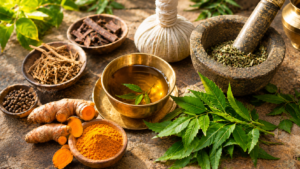
- Anti-inflammatory & Blood-Purifying Herbs: Botanicals such as Guduchi (Tinospora cordifolia), Manjistha (Rubia cordifolia), and Neem help modulate immune overactivity, cool aggravated Pitta, and cleanse Rakta Dhatu to calm both skin plaques and joint heat.
- Joint & Tissue Rejuvenators: Formulations containing Guggulu (such as Kaishora Guggulu or Yogaraja Guggulu) and Shallaki (Boswellia serrata) help scrape away accumulated Ama from the joint capsules, reducing swelling and preserving cartilage integrity.
2. Detoxification and External Panchakarma Therapies
When inflammation is chronic, internal herbs work far more effectively when paired with external therapies that draw toxins out of the tissues and soothe aggravated Vata:
- Virechana (Therapeutic Purgation): Because Pitta and blood toxicity sit at the core of psoriatic pathology, medically supervised Virechana is often the cornerstone of Healing Psoriatic Arthritis, resetting gut health and significantly lowering systemic inflammatory markers.
- Patra Pinda Sweda & Dhanyamla Dhara: Depending on whether your joints are cold and stiff (Vata-dominant) or hot, red, and swollen (Pitta-Ama-dominant), warm herbal leaf poultices or medicated fermented liquid pouring (Dhanyamla Dhara) can dramatically relieve localized pain and stiffness without irritating sensitive skin.
- Takradhara: Pouring medicated buttermilk over the forehead or body helps calm the nervous system, addressing the stress-inflammation loop that triggers psoriatic flares.
3. Anti-Inflammatory Diet & Lifestyle (Ahara and Vihara)
No clinical treatment can outpace a daily diet that continuously feeds inflammation. Among the most effective Natural Ways to Treat Psoriatic Arthritis are consistent, mindful shifts in how you eat and move:
- Eliminate Viruddha Ahara (Incompatible Foods): Ayurveda strictly warns against combining dairy with sour fruits, fish, or excessive salt, as these combinations rapidly generate Ama and trigger skin-joint flares. Minimize refined sugars, deep-fried foods, nightshades (if you notice personal sensitivity), and excess red meat.
- Favor Warm, Digestible Nourishment: Base your meals around cooked vegetables, mung dal, bitter greens (like fenugreek and bitter gourd), turmeric, ginger, and healthy fats like pure cow’s ghee, which lubricates joints and pacifies Vata.
- Gentle, Low-Impact Movement: Complete immobility worsens stiffness, while high-impact exercise damages inflamed joints. Daily gentle yoga, swimming, or brisk walking keeps synovial fluid circulating and maintains tendon flexibility.
- Prioritize Stress Regulation: Psychological stress is one of the strongest documented triggers for both psoriasis and joint flares. Ten minutes of daily Pranayama (such as Nadi Shodhana or Sheetali) helps downregulate cortisol and stabilize immune reactivity.
When to Seek Professional Guidance
If you have psoriasis and are experiencing persistent joint aches, morning stiffness, or swelling in your fingers, toes, or knees, do not wait for the pain to become debilitating. Early diagnosis and holistic intervention can prevent irreversible joint damage and keep you active for decades to come.
A thorough, individualized evaluation examining your pulse (Nadi Pariksha), digestive strength, skin presentation, and joint mobility allows us to build a safe, structured roadmap toward lasting relief.
Frequently Asked Questions (FAQs)
-
How do I know if my psoriasis is psoriatic arthritis?
You should suspect psoriatic arthritis if your skin psoriasis is accompanied by persistent joint pain, warmth, or swelling especially if you experience stiffness lasting more than 30 minutes in the morning, uniform swelling of an entire finger or toe (“sausage digits”), unexplained heel or foot pain, or tiny pits and lifting in your fingernails.
A clinical evaluation, supported by inflammatory blood markers and imaging, confirms the diagnosis.
-
Can psoriasis turn into psoriatic arthritis?
Psoriasis itself does not “turn into” psoriatic arthritis as a single mutation, nor does having severe skin psoriasis guarantee you will get joint disease. Rather, both conditions stem from the same underlying immune system dysfunction.
In certain individuals, that systemic inflammation eventually expands beyond the skin to affect the joints and tendons.
-
What are the chances of getting psoriatic arthritis if I have psoriasis?
Clinical studies indicate that approximately 20% to 30% of people living with psoriasis will eventually develop psoriatic arthritis. While it can appear at any age, it most commonly emerges between the ages of 30 and 50, typically 5 to 10 years after the first skin symptoms appear.
Having a family history of PsA or noticeable nail psoriasis increases your statistical risk.
-
What are the six signs of psoriatic arthritis?
The six classic clinical signs to watch for are:
- Swollen, painful joints (often asymmetrical, affecting one side more than the other).
- Prolonged morning stiffness that eases with gentle movement.
- Dactylitis, or painful swelling of an entire finger or toe.
- Enthesitis, causing tenderness where tendons attach to bone (such as the Achilles heel or sole of the foot).
- Nail abnormalities, including pitting, ridges, discoloration, or separation from the nail bed.
- Inflammatory lower back or neck pain (spondylitis) that worsens after prolonged rest.
5. Can Ayurveda help manage psoriatic arthritis without harsh side effects?
Yes. Ayurvedic treatment for Psoriatic Arthritis focuses on correcting root metabolic dysfunction (Ama), balancing aggravated Vata and Pitta doshas, and modulating immune overactivity through personalized herbal formulations, dietary discipline, and targeted Panchakarma therapies.
When supervised by a qualified Ayurvedic physician, this holistic approach helps reduce flare frequency, protect joint mobility, and improve skin health safely and sustainably.
6. Does cold or damp weather make psoriatic arthritis worse?
Many patients notice a distinct flare in joint stiffness and aching during winter or monsoon seasons.
In Ayurveda, cold and damp conditions naturally aggravate Vata and Kapha doshas, constricting micro-channels and increasing joint stiffness. Keeping joints warm, practicing gentle daily movement, and using physician-recommended medicated herbal oils for external application can help protect against seasonal flares.
7. What foods should I avoid if I have psoriatic arthritis?
To support Healing Psoriatic Arthritis, it is best to limit foods that fuel systemic inflammation and Ama accumulation. This includes refined sugar, ultra-processed snacks, deep-fried foods, excessive alcohol, red meat, and Ayurvedic incompatible food combinations (such as mixing milk or yogurt with sour fruits, fish, or heavy salty meals).
Focusing on warm, freshly cooked, anti-inflammatory whole foods makes a measurable difference in daily symptom control.