Non-Surgical Rheumatoid Arthritis Treatment: Clinical Guide
Table of Contents
- What Is Rheumatoid Arthritis? Modern Immunology vs. Classical Pathology (Amavata)
- Early Warning Signs: When to Seek Medical Evaluation
- Why Localized Injections Often Fall Short for a Systemic Disease
- The 4-Phase Non-Surgical Protocol for Rheumatoid Arthritis
- Anti-Inflammatory Dietary Protocol (Pathya-Apathya)
- Clinical Care & Specialized Support for Rheumatoid Arthritis
- Frequently Asked Questions (FAQs)
Persistent morning stiffness lasting over an hour, symmetrical swelling across wrists and knuckles, burning tenderness in the joints, and chronic, unexplained fatigue Rheumatoid Arthritis (RA) is far more than standard wear-and-tear.
It is a systemic autoimmune disorder in which the immune system mistakenly attacks its own synovial membranes, gradually destroying cartilage and underlying bone tissue.
Many patients exploring non-surgical treatment options find themselves cycling through two common approaches: long-term immunosuppressants (DMARDs, biologics, corticosteroids) with challenging side-effect profiles, or localized interventional injections (such as cortisone or Platelet-Rich Plasma / PRP) that temporarily calm an isolated joint without addressing the active autoimmune process circulating through the bloodstream.
True non-surgical remission requires targeting the root cause. neutralizing circulating autoimmune triggers, resetting digestive and cellular metabolism, and restoring immune self-tolerance.
Understanding how classical, root-cause medical systems interpret and resolve this condition offers a clear roadmap toward sustained, drug-free joint health.
What Is Rheumatoid Arthritis? Modern Immunology vs. Classical Pathology (Amavata)
In modern rheumatology, RA is defined as an autoimmune cascade where pro-inflammatory cytokines (such as TNF-alpha, IL-1, and IL-6) infiltrate the joint synovium, stimulating aggressive pannus formation and cartilage degradation.
In classical holistic medicine, Rheumatoid Arthritis is understood as Amavata, a condition generated by the compounding interaction of Ama (unmetabolized, toxic cellular debris) and disrupted Vata Dosha (the kinetic principle governing neurological and circulatory functions).
Pathogenesis of Rheumatoid Arthritis (Amavata Samprapti)
How gut-derived metabolic endotoxins trigger systemic joint destruction
- Agnimandya (Weak Digestive Fire): Chronic psychological stress, erratic sleep patterns, or incompatible dietary habits impair digestive enzymes (Jatharagni) and cellular metabolism (Dhatvagni).
- Ama Formation: Unmetabolized food elements ferment in the gastrointestinal tract, producing an antigenic, sticky macromolecular residue termed Ama.
- Circulatory Transmission: Disrupted Vata (specifically Vyana Vayu) drives these toxins out of the gut and into deep systemic circulation (Dhamanis).
- Synovial Deposition: This toxic complex settles into the joint cavities (Sandhis). The immune system misidentifies this foreign biological residue, unleashing chronic inflammatory cascades that manifest as heat, severe swelling, morning rigidity, and progressive joint erosion.
Early Warning Signs: When to Seek Medical Evaluation
Catching autoimmune joint disease before permanent bone damage occurs is essential for long-term joint preservation. Clinical evaluation is recommended if you notice:
- Morning stiffness exceeding 30 to 60 minutes that improves only after warm showers or extended movement.
- Symmetrical joint swelling or tenderness, particularly affecting the identical small joints of both hands, wrists, or feet simultaneously.
- Pain that returns to the exact same spot repeatedly, accompanied by localized warmth and redness.
- Systemic inflammatory symptoms, such as low-grade evening fevers, generalized malaise, and unexplained loss of appetite (Aruchi).
- Progressive loss of hand grip strength, complicating basic tasks like opening jars, wringing laundry, or turning door handles.
Why Localized Injections Often Fall Short for a Systemic Disease
Many modern outpatient clinics emphasize localized regenerative interventions most notably Platelet-Rich Plasma (PRP) or steroid injections as definitive non-surgical options for Rheumatoid Arthritis.
While PRP offers measurable benefit for mechanical damage, sports injuries, or isolated wear-and-tear osteoarthritis, it cannot resolve the underlying cause of Rheumatoid Arthritis.
| Clinical Parameter | Localized Injections (PRP / Steroids) | Comprehensive Root-Cause Medical Therapy |
| Therapeutic Scope | Confined strictly to the single injected joint capsule | Systemic whole-body immune modulation |
| Underlying Pathology | Leaves systemic autoimmune autoantibodies (RF, Anti-CCP) active | Digests and clears circulating metabolic endotoxins (Ama) |
| Inflammatory Markers | Does not systematically reduce elevated ESR or CRP titers | Clinically targeted to lower systemic ESR, CRP, and RF titers |
| Recurrence Rate | High; surrounding joints continue to flare over time | Low; addresses gut health to prevent secondary inflammatory flares |
| Procedure Type | Repeated needle punctures into the synovial capsule | Non-invasive, biological, and metabolic |
The 4-Phase Non-Surgical Protocol for Rheumatoid Arthritis
Sustainable, non-surgical reversal of joint inflammation requires a sequential clinical protocol that clears circulating endotoxins, cools synovial heat, and rebuilds joint mechanics.
The 4-Phase Ayurvedic Treatment Protocol for Amavata (Rheumatoid Arthritis)
Root-cause clinical approach to clear Ama, calm immune inflammation & rebuild joints
Phase 1: Rekindling Digestive Fire (Deepana-Pachana)
In acute Rheumatoid Arthritis, applying heavy oil massages is contraindicated; placing heavy lipids over active endotoxins increases channel congestion (Srotorodha).
Therapy begins with metabolic carminatives (Shunthi, Amrutadi Guggulu, Vaishwanara) alongside a light, warm diet to metabolize Ama at its source.
Phase 2: Dry Fomentation (Rooksha Swedana / Valuka Sweda)
To address swelling and severe morning rigidity without provoking inflammatory heat, therapists apply Valuka Sweda warm sand poultices infused with dry therapeutic herbal powders.
The dry, penetrating warmth mobilizes synovial fluid retention, reduces swelling, and softens contracted tendons.
Phase 3: Classical Bio-Purification (Shodhana)
Once toxins have liquefied, structured biological detoxification eliminates them from the physiological channels:
- Virechana (Therapeutic Purgation): Purges inflammatory metabolic heat and circulatory toxins through the liver and lower digestive tract, contributing to reductions in systemic inflammatory markers.
- Vaitarana Basti & Kshara Basti: Specialized therapeutic enemas prepared with castor oil, tamarind pulp, rock salt, and purified guggulu. Administered into the colon the primary seat of Vata this protocol scrapes stubborn endotoxins from pelvic and peripheral channels.
- Tikta Ksheera Basti: In chronic cases where cartilage thinning has begun, medicated bitter milk-decoction enemas deliver targeted nourishment directly to bone tissues (Asthi Dhatu).
Phase 4: Immune Modulation & Tissue Regeneration (Rasayana)
Following bio-cleansing, classical plant-derived compounds help stabilize immune response and support cartilage repair:
- Shallaki (Boswellia serrata): Contains boswellic acids that inhibit the pro-inflammatory 5-LOX enzyme, offering pain relief without causing gastric ulcers.
- Guduchi (Tinospora cordifolia): A potent immunomodulatory herb that calms autoimmune hyperreactivity and clears circulatory uric acid and toxins.
- Yogaraja Guggulu & Kaishora Guggulu: Time-tested classical formulations that detoxify synovial fluid, ease joint stiffness, and restore natural range of motion.
Anti-Inflammatory Dietary Protocol (Pathya-Apathya)
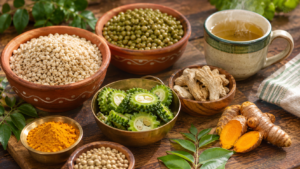
Long-term management of autoimmune joint conditions depends heavily on nutritional habits that sustain a strong metabolic fire:
Beneficial Foods to Prioritize (Pathya)
- Ancient Grains: Aged barley (Yava), millets, and unpolished red or brown rice.
- Vegetables & Spices: Bitter gourd (Karela), bottle gourd, moringa (drumsticks), garlic, dry ginger, and turmeric.
- Hydration: Boiled drinking water infused with dry ginger and coriander seeds, consumed warm throughout the day.
- Gentle Movement: Gentle joint-opening movements (Sukshma Vyayama) performed within pain-free limits once acute swelling has stabilized.
Foods & Habits to Avoid (Apathya)
- Fermented & Sour Foods: Curds/yogurt, vinegar, fermented batters, and heavy pickles.
- Incompatible Foods (Viruddha Ahara): Combinations of dairy with fish, sour fruits, or salty foods.
- Cold & Processed Items: Chilled beverages, commercial bakery sweets, refined flours, and heavy fried meals.
- Daytime Sleeping (Divaswapna): Sleeping during the day slows metabolic rate and accelerates endotoxin retention.
Clinical Care & Specialized Support for Rheumatoid Arthritis
While self-care, dietary alignment, and natural supplements form a solid basis for joint health, chronic or advancing Rheumatoid Arthritis requires individualized clinical oversight. Because every individual’s metabolic state, doshic constitution, and disease progression differ, treatment must be carefully tailored.
For individuals seeking comprehensive, non-surgical care in Bangalore, Vedam Ayurveda Multispecialty Hospital provides dedicated clinical programs for Rheumatoid Arthritis and autoimmune joint disorders.
Led by Chief Physician Dr. Raviraj M, the hospital’s medical team conducts thorough diagnostic assessments including pulse evaluation (Nadi Pariksha) and systemic doshic mapping to design personalized, root-cause treatment protocols.
Through specialized inpatient therapy suites, monitored Panchakarma detox programs, and classical herbal regimens, the hospital focuses on helping patients reduce dependence on painkillers, halt cartilage degeneration, and regain long-term joint mobility.
To learn more about non-surgical care pathways or to schedule a clinical joint consultation, visit Vedam Ayurveda Multispecialty Hospital or explore their dedicated Rheumatoid Arthritis Treatment resources.
Frequently Asked Questions (FAQs)
-
What is rheumatoid arthritis?
Rheumatoid arthritis is a chronic autoimmune condition where the body’s immune system mistakenly attacks the healthy synovial membranes lining the joints, leading to painful swelling, morning stiffness, and potential cartilage and bone erosion over time.
-
What are the common symptoms of rheumatoid arthritis?
Common symptoms include symmetrical joint pain, persistent localized swelling, morning stiffness lasting longer than 30 to 60 minutes, fatigue, low-grade fever, and reduced grip strength in everyday tasks.
-
What are the non-surgical treatment options for rheumatoid arthritis?
Non-surgical treatment options include conventional medications (DMARDs, NSAIDs), physical therapy, localized injections (PRP, steroids), and holistic medical protocols.
Classical non-surgical protocols focus on bio-cleansing (such as Virechana and Vaitarana Basti), dry sand fomentation (Valuka Sweda), and herbal immunomodulators that eliminate the systemic metabolic trigger (Ama) without surgery.
-
Can PRP therapy cure rheumatoid arthritis?
No. PRP therapy provides localized tissue support for mechanical injuries or wear-and-tear osteoarthritis, but it cannot cure Rheumatoid Arthritis.
Because RA is a systemic autoimmune disorder driven by circulating antibodies and immune complexes, localized injections do not resolve the underlying systemic disease.
-
What are the risk factors for developing rheumatoid arthritis?
Risk factors include genetic predisposition (such as HLA-DR4 markers), age (commonly appearing between 30 and 60 years), female gender, high stress levels, smoking, gut microbiome imbalances, and a history of joint trauma.
-
How does a natural root-cause approach treat rheumatoid arthritis without surgery?
A natural root-cause approach addresses RA by rekindling digestive fire (Agni), dissolving metabolic toxins (Ama), eliminating systemic inflammatory triggers through bio-cleansing therapies, and utilizing anti-inflammatory herbs like Shallaki and Guduchi to preserve joint integrity non-surgically.
-
How long does non-surgical treatment take to show results in RA?
Initial symptomatic relief from pain, swelling, and morning stiffness is commonly observed within 2 to 4 weeks of starting digestive carminatives and dry heat therapies.
Achieving stable, long-term remission generally involves 2 to 3 weeks of clinical bio-cleansing followed by 3 to 6 months of internal herbal care and dietary adherence.