
Vamana Panchakarma Therapy in Bangalore: Benefits, Procedure & Expert Care
Table of Contents
Living in an urban hub like Bangalore exposes us to erratic weather, heightened air pollution, sedentary routines, and stress. Over time, these environmental and lifestyle factors aggravate Kapha dosha, leading to chronic respiratory congestion, lethargy, stubborn metabolic weight gain, and inflammatory skin conditions like psoriasis or eczema.
While contemporary wellness trends often rely on quick juice fasts, authentic Ayurveda addresses the root cause of systemic toxicity through classical Shodhana (purification). Among the five foundational cleansing procedures, Vamana Karma (Therapeutic Emesis) stands as the premier, targeted therapy for eliminating deep-seated Kapha toxins (Ama).
If you are planning to undergo holistic cleansing, explore our comprehensive guide to Panchakarma Treatment in Bangalore to discover how personalized Ayurvedic therapies restore bodily harmony.
What Is Vamana Panchakarma Therapy?
Vamana Karma is the controlled, medically supervised expulsion of aggravated Kapha and associated Pitta doshas through the upper gastrointestinal tract.
Unlike spontaneous vomiting caused by illness or food poisoning which causes dehydration, acid burn, and weakness Vamana is an elaborate, therapeutic protocol.
It involves days of preparatory cellular lubrication (Snehana) and heat liquefaction (Swedana). This process draws metabolic waste from peripheral tissues into the stomach (Amashaya), where it is effortlessly expelled using soothing herbal concoctions.
Conditions Treated by Vamana Therapy
Vamana is specifically prescribed when Kapha dosha is the primary pathological driver or combined with Pitta. Clinical indications include:
- Respiratory Disorders: Chronic bronchitis, allergic asthma, persistent sinusitis, recurrent chest congestion, and allergic rhinitis.
- Dermatological Conditions: Plaque psoriasis, chronic eczema, stubborn acne vulgaris, and urticaria driven by systemic toxicity.
- Metabolic & Hormonal Imbalances: Slow metabolism, sluggish digestion, obesity, thyroid dysfunction, and PCOS-linked insulin resistance.
- Autoimmune & Inflammatory Concerns: Heaviness in the joints, chronic sluggishness, and seasonal lethargy.
The 3 Clinical Stages of Classical Vamana
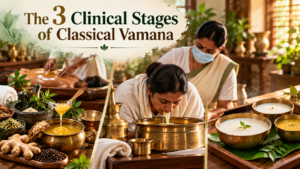
At a specialized hospital, Vamana is never performed as a one-hour walk-in session. To guarantee clinical safety and maximum cellular detoxification, it follows a rigorous three-phase classical roadmap:
1. Poorva Karma (Preparatory Phase)
Detoxification cannot occur until deep-seated cellular toxins are mobilized toward the gut:
- Deepana & Pachana: Administration of digestive herbs (such as Trikatu and Chitrakadi) to rekindle digestive fire (Agni) and digest circulating endotoxins.
- Abhyantara Snehana (Internal Oleation): Daily consumption of escalating doses of medicated cow’s ghee or oil over 3 to 7 days to penetrate cell membranes and detach toxins.
- Bahya Snehana & Swedana (External Therapies): Warm herbal oil massages (Abhyanga) followed by steam box fomentation (Swedana) to dilate microchannels (Srotas) and guide toxins toward the stomach.
2. Pradhana Karma (The Main Cleansing Day)
On the morning of the procedure, after vital checks and patient evaluation:
- The patient drinks soothing natural fluids such as medicated milk or sugarcane juice to fill the stomach and buffer the esophageal lining.
- A precisely calibrated decoction of classical emetics such as Madanaphala (Randia dumetorum) and Yashtimadhu (Licorice) is administered under direct physician observation.
- Controlled emetic bouts (Vegas) occur naturally, releasing thick phlegm, bile, and mucous buildup.
- Vital signs, heart rate, hydration levels, and expelled materials are continuously monitored.
3. Paschat Karma (Post-Procedure Restoration)
The digestive fire is delicate immediately following Shodhana. Patients transition through Samsarjana Krama—a structured 3- to 7-day graduated diet:
- Beginning with warm, clear rice water (Manda).
- Progressing to semi-solid rice gruel (Peya and Vilepi).
- Concluding with light lentil broths (Yusha) before resuming regular solid meals.
Why Out-of-State Chains Fall Short: The Advantage of Local Specialized Care
Many pan-India hospital networks rely on generalized regimens and high patient churn. Authentic Panchakarma requires individualized care:
| Assessment Factor | Standard Multi-City Chains | Specialized Classical Ayurvedic Hospital |
| Prakruthi Evaluation | Basic checklist approach | In-depth pulse analysis (Nadi Pariksha) and Dosha assessment |
| Ghee Dosage Calibration | Fixed, rigid scheduling | Dynamic daily titration based on bowel habits and appetite |
| Physician Supervision | Often delegated to junior attendants | Chief Vaidya oversight during the entire Pradhana Karma |
| Customized Diet Support | Generic printouts | Daily personalized Samsarjana dietary instructions |
To ensure therapies align precisely with your constitutional balance, consult with the experienced doctors guiding our Panchakarma Treatment in Bangalore.
Frequently Asked Questions
Is Vamana painful or exhausting?
Because the stomach is pre-buffered with large volumes of medicated fluids and the body’s channels are lubricated through Snehana, the emetic bouts do not involve the painful retching associated with illness. Patients routinely report a distinct sensation of lightness in the chest and head immediately afterward.
Who should avoid Vamana therapy?
Vamana is contraindicated for pregnant women, young children, elderly patients with cardiac conditions, and individuals experiencing acute emaciation, active gastrointestinal bleeding, or severe hypertension. A qualified Ayurvedic physician must screen every candidate.
How long does the entire Vamana protocol take?
While the primary emetic procedure takes 1 to 2 hours on the scheduled morning, the end-to-end program spans 7 to 14 days, incorporating home-based or in-clinic preparation, the purification day, and dietary restoration.
How much does Vamana Panchakarma cost in Bangalore?
Pricing depends on whether the preparatory oleation and post-care are completed on an outpatient day-care basis or as an in-patient package, ranging typically between ₹12,000 and ₹35,000 depending on customized herbal requirements and medical observation.
Ready to Reset Your Health at the Root?
Do not suppress recurring seasonal allergies, sluggish digestion, or persistent skin flare-ups with temporary fixes. Restore true cellular equilibrium through classical Ayurvedic detoxification.
Explore our full clinical spectrum of therapies on our Panchakarma Treatment in Bangalore page, or book a consultation with our senior Ayurvedic physicians today.