How to Heal PCOD/PCOS Naturally?
Table of Contents
Waking up to erratic menstrual cycles, sudden weight gain around the abdomen, cystic acne, and the emotional exhaustion of unpredictable mood swings has become an everyday reality for millions of women worldwide.
Polycystic Ovarian Disease (PCOD) and Polycystic Ovarian Syndrome (PCOS) are not just superficial reproductive glitches; they are complex endocrine and metabolic disorders that alter how your body processes energy, balances hormones, and ovulates.
In conventional treatment plans, the standard response is often a prescription for oral contraceptive pills to force artificial withdrawal bleeding, or metformin to balance insulin.
While these provide temporary symptom control, the underlying issues usually resurface as soon as medication stops. This has prompted many women to look into Natural Ways to Treat PCOS and Healing PCOD Naturally.
Through classical Ayurveda healing of PCOD is achieved by clearing deep-seated metabolic waste, rekindling digestive and cellular fire, and regulating the body’s natural hormonal rhythm from within.
Understanding PCOD/PCOS: The Ayurvedic Root Cause
In classical Ayurvedic terminology, the symptoms associated with PCOD and PCOS are understood through conditions such as Artava Kshaya (deficiency or irregularity of menstrual tissue), Nashtartava (absence of regular ovulation), and Granthi (cystic follicular accumulation).
Ayurveda explains this condition as a systemic Tridoshic imbalance, predominantly driven by two opposing doshas:
- Kapha Dominance (The Physical Obstruction): Excess Kapha brings sluggish, heavy, and sticky properties into the body. This coats and congests the micro-channels of the reproductive tract (Artava Vaha Srotas).
As a result, ovarian tissue thickens and developing follicles cannot break open to release eggs, instead forming benign, fluid-filled cysts (Granthi).
- Vata Derangement (The Functional Stagnation): In particular, Apana Vayu the downward-moving energetic force responsible for healthy menstruation, ovulation, and waste elimination becomes erratic and blocked. This leads to delayed, scanty, or missed periods.
- Pitta Involvement (Metabolic Heat & Androgens): When Pitta becomes aggravated, it manifests as hyperandrogenism (excess male hormones), causing cystic acne, facial hair growth, thinning scalp hair, and systemic inflammation.
At the core of this imbalance lies impaired digestive fire (Mandagni). Weak digestion generates Ama (unmetabolized, toxic cellular debris) that enters circulation, coats insulin receptors, triggers insulin resistance, and disrupts communication between the pituitary gland and the ovaries.
4 Foundational Pillars to Heal PCOD/PCOS Naturally
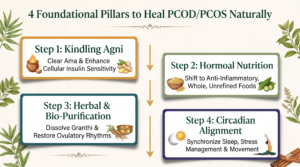
Addressing PCOS and PCOD naturally requires a multi-faceted approach that repairs metabolism, restores hormonal balance, and clears channel blockages:
1. Kindling Agni & Eliminating Ama
Natural healing cannot begin while the digestive fire is sluggish. Rekindling Agni helps the body burn accumulated Ama and absorb essential micronutrients.
- Drink warm water boiled with half a teaspoon of crushed cumin, coriander, and fennel seeds throughout the day.
- Avoid heavy, cold, and leftover foods that strain digestive enzymes.
- Practice mindful eating by consuming your largest meal at midday, when natural digestive fire peaks.
2. Hormonal Nutrition and Anti-Inflammatory Diet
The food you consume acts as direct instructions to your endocrine system. An anti-PCOS diet focuses on low-glycemic, anti-inflammatory, and fiber-rich meals that prevent insulin spikes:
- Complex Grains: Replace white rice, refined flour, and processed cereals with ancient grains like barley (Yava), millets (foxtail, barnyard, ragi), and brown or red rice.
- Bitter and Astringent Greens: Incorporate bitter gourd (Karela), moringa (drumsticks), spinach, fenugreek leaves, and bottle gourd to clear liver pathways and purge heat toxins.
- Eliminate Trigger Foods: Strictly cut down on refined white sugar, ultra-processed snacks, carbonated sodas, and inflammatory fried snacks.
3. Circadian Rhythm Realignment & Functional Exercise
The hypothalamic-pituitary-ovarian (HPO) axis that governs ovulation is directly wired into your circadian rhythm. Disrupted sleep elevates cortisol, which immediately spurs the ovaries to produce excess testosterone:
- Sleep Routine: Go to bed by 10:00 PM and wake up with or before the sun. Avoid sleeping during the daytime (Divaswapna), as this significantly aggravates Kapha and slows metabolism.
- Targeted Movement: Engage in 45 minutes of daily moderate activity, such as brisk walking, strength training, or classical yoga postures (e.g., Baddha Konasana, Bhujangasana, and Surya Namaskar) to encourage pelvic blood flow and stimulate Apana Vayu.
4. Stress Modulation
Chronic psychological tension floods the body with adrenaline and cortisol. Practice 15 minutes of daily cooling Pranayama (such as Nadi Shodhana and Bhramari) to down-regulate sympathetic nervous system activity and support ovarian function.
Potent Herbal Therapies for Hormonal Harmony
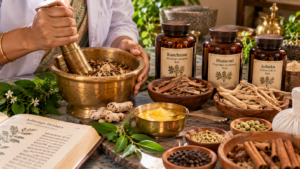
Classical Ayurveda utilizes targeted herbal formulations designed to dissolve cysts, improve ovarian tissue health, and normalize menstrual frequency:
- Kanchanar Guggulu: The primary classical remedy for Granthi Hara (clearing benign growths and cysts). It clears lymphatic congestion, reduces ovarian swelling, and supports thyroid metabolism.
- Varunadi Kwath: A potent herbal decoction that addresses excess Kapha and adipose accumulation, making it particularly beneficial for weight-bearing and insulin-resistant PCOS.
- Shatavari (Asparagus racemosus): A renowned reproductive tonic (Rasayana) that nourishes the uterine lining, promotes healthy follicle maturation, and supports balanced estrogen levels.
- Lodhra (Symplocos racemosa): Clinically valued for reducing excess androgens, clearing hormonal cystic acne, and stabilizing heavy or irregular flow.
- Cinnamon (Tvak): Helps enhance insulin receptor sensitivity and supports healthy, spontaneous ovulation.
When to Seek Clinical Care at Vedam Ayurveda, Bangalore
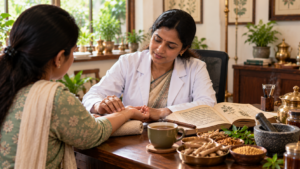
While at-home dietary shifts and herbal routines form a strong foundation, chronic or severe PCOS often involves deep channel obstructions that require specialized medical intervention.
Sustained hormonal recovery frequently necessitates physician-administered Panchakarma therapies such as Virechana (therapeutic liver and blood detox) and Basti (medicated oil and decoction enemas like Lekhana Basti or Matra Basti) to directly pacify Apana Vayu and reboot the endocrine axis.
If you are looking for authentic, physician-supervised care, explore ayurvedic treatment for pcos in Bangalore. At Vedam Ayurveda Multispecialty Hospital, our experienced Vaidyas develop personalized treatment roadmaps based on your unique doshic constitution (Prakriti).
Access clinically formulated ayurvedic medicine for pcod in bangalore and book a consultation with our senior physicians. Visit Vedam Ayurveda to discover how holistic, root-cause healing can help you reclaim balanced cycles and long-term vitality.
Frequently Asked Questions (FAQs)
Can a PCOD girl eat curd?
In Ayurveda, traditional store-bought or thick curd (yogurt) is generally discouraged for women with PCOD/PCOS. Curd is heavy (Guru), cooling, and channel-blocking (Abhishyandi), which directly aggravates Kapha dosha and promotes cystic blockages (Srotorodha).
Instead of thick curd, Ayurveda recommends freshly churned, diluted buttermilk (Takra) seasoned with roasted cumin powder, rock salt, and a pinch of ginger, which stimulates digestion without blocking reproductive channels.
What foods are good for PCOD?
Beneficial foods for PCOD/PCOS are anti-inflammatory, low on the glycemic index, and supportive of healthy metabolism:
- Ancient Whole Grains: Barley, foxtail millet, pearl millet (bajra), and unpolished red rice.
- Cruciferous & Bitter Vegetables: Bitter gourd, ridge gourd, bottle gourd, broccoli, and fenugreek leaves.
- Healthy Fats: Small quantities of pure A2 cow’s ghee, cold-pressed sesame oil, and soaked almonds.
- Metabolic Spices: Cinnamon, turmeric, fenugreek seeds, cumin, black pepper, and fresh ginger.
What to drink to reduce PCOS?
Several herbal infusions help balance hormones and improve metabolic function:
- Spearmint Tea: Drinking pure spearmint tea twice daily helps reduce free circulating testosterone, helping manage facial hair (hirsutism) and hormonal acne.
- Fenugreek (Methi) Water: Soaking 1 teaspoon of fenugreek seeds overnight in water and drinking it warm on an empty stomach helps regulate blood sugar and improve insulin sensitivity.
- Cinnamon Tea: Boiling Ceylon cinnamon in water supports glucose metabolism and helps stimulate ovulatory cycles.
- CCF Tea (Cumin, Coriander, Fennel): Flushes systemic toxins (Ama), relieves abdominal bloating, and aids digestion.
How do I treat my PCOS at home?
To manage and treat PCOS at home naturally:
- Shift to a low-glycemic, anti-inflammatory whole-food diet free of refined sugars, processed dairy, and packaged snacks.
- Engage in 40 to 45 minutes of daily physical exercise (such as brisk walking, Surya Namaskar, or strength training).
- Regulate your sleep cycle by going to bed by 10:00 PM and avoiding daytime naps.
- Consume natural herbal teas (like spearmint, fenugreek, or cinnamon) to aid insulin regulation and reduce androgenic symptoms.
How long does it take to reverse PCOS naturally?
Because natural Ayurvedic PCOS treatments address metabolic pathways and cellular turnover rather than forcing artificial withdrawal bleeding, sustainable recovery typically requires 3 to 6 months of consistent adherence.
Initial improvements in digestion, energy, and skin are often noticeable within 4 to 6 weeks, while regular spontaneous menstrual cycles and ovarian improvements follow over the subsequent months.
Does losing weight help regulate periods in PCOS?
Yes. Adipose tissue (especially visceral fat around the abdomen) produces excess estrogen and worsens insulin resistance.
Clinical studies and Ayurvedic principles both confirm that losing even 5% to 10% of excess body weight can improve insulin sensitivity, reduce circulating androgens, and help re-establish natural, spontaneous ovulation.
Can unmarried young women take Ayurvedic medicine for PCOS?
Yes. Classical Ayurvedic therapies and medicines are natural, non-hormonal, and safe for young women and teenage girls.
Rather than creating lifelong dependence on contraceptive pills, Ayurvedic management for PCOS focuses on diet corrections, herbal metabolic tonics, and gentle non-invasive therapies to establish regular, pain-free periods.