Treating Scalp Psoriasis at Home Through Ayurvedic Therapies
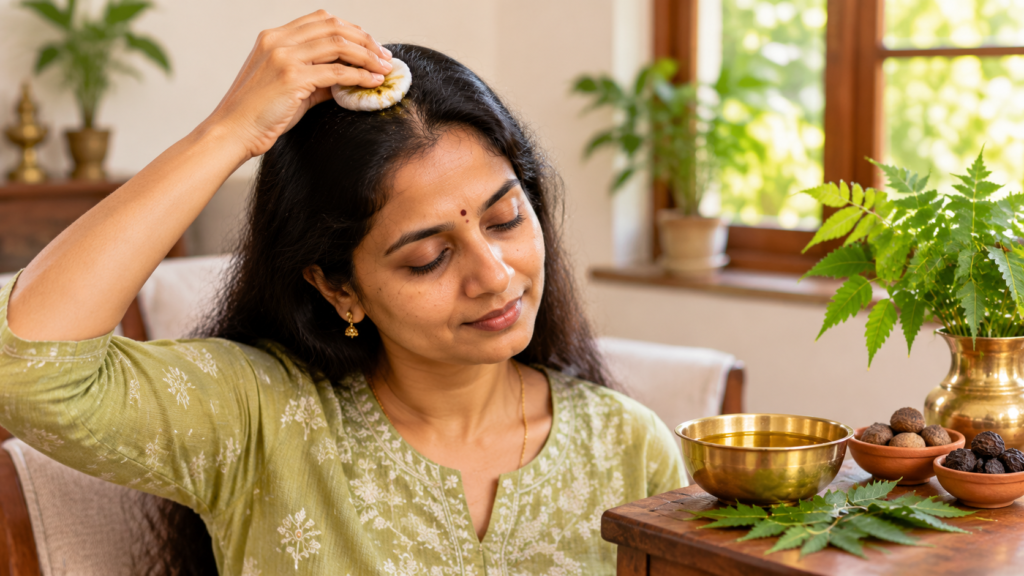
Table of Contents
Waking up to stubborn silver-white flakes dusting your shoulders, an unbearable itch that refuses to calm down, and an inflamed, bleeding scalp every time you run a brush through your hair scalp psoriasis is more than a dermatological concern, it takes a profound psychological and emotional toll.
Many people spend years trapped in an exhausting loop of coal tar formulations, salicylic acid shampoos, and topical corticosteroid lotions. While these conventional treatments offer fleeting surface relief, the plaques almost inevitably rebound with greater intensity the moment application stops. This happens because superficial suppression fails to address why the skin cells on the scalp are dividing ten times faster than normal.
In classical Ayurveda, skin and hair health are regarded as direct reflections of your deep tissue vitality and digestive balance. Exploring scalp psoriasis treatment at home through an authentic Ayurvedic lens allows you to soothe inflamed patches, dissolve adherent silver scales, and calm autoimmune hyperreactivity without harsh chemical side effects.
What Is Scalp Psoriasis in Ayurveda? (Kitibha Kushtha)
In classical Ayurvedic texts, psoriasis affecting the scalp is closely identified with Kitibha Kushtha (and in certain presentations, Eka Kushtha). Ayurveda does not look at the scalp as an isolated region, rather, it views scalp disorders as an external symptomatic manifestation of profound internal imbalances involving the biological humors:
- Vata Dosha Aggravation: Imparts dryness, roughness, silvery-white flaking, scaling, and painful cracking around the hairline and behind the ears.
- Kapha Dosha Aggravation: Drives intense, relentless itching (Kandu), thick buildup of plaques, heaviness, and sticky localized exudate.
- Pitta Dosha Aggravation: Causes burning sensations, severe redness, heat, and localized vascular inflammation.
The Root Cause: Mandagni and Ama Accumulation
The foundational pathology (Samprapti) traces back to impaired digestive fire (Mandagni). Poor dietary combinations, chronic emotional stress, and irregular circadian habits lead to the accumulation of Ama (toxic metabolic endotoxins).
These circulate through the systemic channels (Srotas), deeply vitiating the Rasa (nutrient plasma), Rakta (blood tissue), and Mamsa (muscle/dermal tissue). Because the scalp has a dense vascular network, these heat toxins pool in the scalp capillaries, triggering rapid cellular turnover and dense scale formation.
4 Effective Ayurvedic Home Therapies for Scalp Psoriasis
While chronic flare-ups require clinical oversight, gentle and scientifically structured home therapies can break the itch-scratch cycle, hydrate dried-out plaques, and soften crusted scales.
1. Shiro Pichu (Medicated Oil Retention Compress)
Shiro Pichu is a classical external therapy (Bahya Chikitsa) that delivers sustained herbal nourishment directly to damaged hair follicles and scalp plaques.
- How It Works: A sterile cotton or folded linen pad is soaked in therapeutic Ayurvedic oils such as Karanja Taila (pongamia oil), Jatyadi Taila, or Nimbadi Taila (neem-infused oil). Place the soaked pad directly over the thickest scalp plaques, securing it loosely with a cotton cap or scarf for 30 to 45 minutes.
- Why It Helps: This continuous dermal contact softens dense keratinized scales without aggressive scratching, curbs flaking, and drives anti-inflammatory phytochemicals deep into the epidermal layers.
2. Shiro Lepa (Herbal Scalp Poultice & Pastes)
Applying cooling, antimicrobial, and blood-purifying herbal pastes directly to the scalp clears crusts and pacifies irritated nerve endings.
- Preparation: Mix 1 tablespoon of organic Neem (Azadirachta indica) leaf powder, 1 tablespoon of Manjistha (Rubia cordifolia) powder, and 1 teaspoon of pure Yashtimadhu (Licorice) powder with fresh Aloe Vera gel or cooled licorice decoction to form a smooth paste.
- Application: Part your hair carefully and spread the paste evenly across the plaques. Allow it to sit for 20 to 30 minutes before washing it out with lukewarm water.
- Note: Never allow the herbal paste to dry into a brittle crust, as peeling off dry herbs can lift skin flakes prematurely and trigger the Koebner phenomenon (where micro-trauma generates new psoriasis lesions).
3. Medicated Scalp Washes (Kashaya Prakshalana)
Commercial anti-dandruff and sulfate shampoos often strip the scalp’s natural lipid barrier, aggravating Vata dryness. Replace chemical cleansers with soothing herbal decoctions:
- Triphala & Neem Rinse: Boil 2 tablespoons of crushed Triphala and a handful of fresh or dried Neem leaves in 1 liter of water until reduced by half. Strain through a fine muslin cloth and let it cool to room temperature.
- Usage: Use this lukewarm infusion as a final scalp rinse. Its natural tannins tighten micro-fissures, while azadirachtin prevents opportunistic secondary bacterial infections.
4. Takra Dhara Home Variation (Medicated Buttermilk Rinse)
Buttermilk (Takra) processed with cooling herbs is celebrated in Ayurveda for its exceptional ability to subdue aggravated Pitta and Vata on the scalp.
- Method: Dilute freshly churned buttermilk (made from light curd without butter) with an equal part of water boiled with Musta (Cyperus rotundus) and Amalaki (Indian Gooseberry).
- Action: Pour this lukewarm concoction slowly over the scalp, gently massaging it without using fingernails. It calms scalp burning sensations, softens adherent crusts, and relieves mental stress.
Internal Dietary and Lifestyle Protocol (Pathya-Apathya)
External applications remain ineffective if internal inflammation continues unchecked. Adhering to Ayurvedic dietary wisdom is vital to prevent ongoing flare-ups.
Wholesome Habits to Adopt (Pathya)
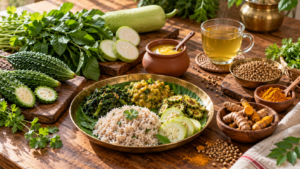
- Cooling, Bitter Vegetables: Incorporate bitter gourd (Karela), bottle gourd, ridge gourd, pointed gourd (Parwal), and leafy greens to cool the liver and detoxify Rakta Dhatu.
- Hydrating Ghee: Consume 1 to 2 teaspoons of pure A2 cow’s ghee or medicated ghee (Mahatiktaka Ghrita) on an empty stomach in the morning to lubricate tissues from within.
- Detoxifying Spices: Use turmeric, coriander seeds, fennel seeds, and cumin in daily cooking.
- Stress Management: Practice daily diaphragmatic breathing (Pranayama), such as Anulom Vilom and Sheetali, to lower cortisol spikes that provoke immune flare-ups.
Habits to Avoid (Apathya)
- Incompatible Foods (Viruddha Ahara): Never combine milk with fish, sour fruits, or salt.
- Excessively Sour & Fermented Items: Cut out heavy vinegar, aged cheeses, excessive pickles, and sour curd (Dadhi), which block the micro-channels (Srotas).
- Deep-Fried & Refined Foods: Minimize refined flour, white sugar, and reheated cooking oils that fuel systemic Ama.
- Daytime Sleep & Late Nights: Sleeping during the daytime worsens Kapha, while staying awake past midnight aggravates dry Vata.
When Home Care Is Not Enough: Specialized Clinical Care
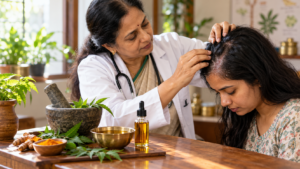
While home treatments provide relief, stubborn, longstanding scalp psoriasis often involves deep-seated toxins that cannot be cleared through topical home remedies alone. Sustained scalp psoriasis cure in ayurveda requires structured bio-cleansing (Panchakarma).
Clinical protocols such as Virechana (therapeutic purgation to clear blood toxins), Vamana (therapeutic emesis for thick Kapha plaques), and hospital-administered Takradhara (continuous stream of medicated buttermilk over the head) work synergistically to reboot the immune system and clear the root metabolic triggers.
If you are looking for long-term clinical remission, seek out specialized scalp psoriasis treatment in bangalore. At Vedam Ayurveda Multispecialty Hospital, patients receive personalized, root-cause-focused therapies that combine classical Panchakarma with authentic internal formulations.
Consult with Dr. Raviraj M, recognized among the Best Doctors For Psoriasis Treatment In Bangalore, to receive an accurate Prakriti-Vikriti diagnosis and embark on a comprehensive scalp psoriasis treatment journey. Discover how integrative Ayurvedic therapies can restore your scalp health by visiting Vedam Ayurveda today.
Frequently Asked Questions (FAQs)
1: How can I reduce scalp psoriasis?
You can reduce scalp psoriasis naturally by softening and loosening thick scales with cold-pressed herbal oils (such as Karanja or Neem oil), switching to gentle herbal rinses like Triphala decoction instead of harsh chemical shampoos, and eliminating trigger foods like processed sugars, alcohol, and fermented dairy.
Managing psychological stress through daily meditation or Pranayama also plays a key role in reducing autoimmune flare-ups.
2: What is stage 1 of scalp psoriasis?
Stage 1 (mild scalp psoriasis) typically presents as faint redness, mild localized itching, and fine, dry, powdery flaking along the scalp or hairline that is frequently mistaken for stubborn dandruff.
At this early stage, thick silvery-white plaques have not yet fully formed, making it the most responsive stage for natural Ayurvedic oil therapies and dietary changes.
3:What is the root cause of scalp psoriasis?
While modern medicine attributes scalp psoriasis to an autoimmune genetic predisposition where T-cells accelerate skin cell regeneration, Ayurveda traces the root cause to impaired digestive fire (Mandagni).
When digestion is weak, undigested metabolic endotoxins (Ama) enter the bloodstream, vitiating the Vata and Kapha doshas and accumulating in the Rasa-Rakta (plasma and blood) channels of the scalp.
4: Can I apply coconut oil for scalp psoriasis?
Yes, virgin cold-pressed coconut oil is deeply hydrating, soothing, and contains lauric acid, which possesses natural antimicrobial properties.
In Ayurveda, coconut oil is cooling in nature (Sheeta Virya), making it helpful for pacifying Pitta-induced burning and redness. For optimal results, infuse coconut oil with therapeutic herbs like Neem, Karanja, or Manjistha to enhance scale dissolution and calm itching.
5: Is Scalp psoriasis 100% curable?
In conventional dermatology, scalp psoriasis is classified as a chronic, incurable autoimmune disease subject to recurring flare-ups.
In Ayurveda, achieving long-term, sustained clinical remission where the scalp remains completely free of scales, redness, and itching for years is achievable through classical Panchakarma detoxification, tailored blood-cleansing herbs, and long-term adherence to balanced diet and lifestyle habits (Pathya).
6: Which is the best treatment for scalp psoriasis?
The best approach is a multi-modal protocol combining internal detoxification (Shodhana) with localized external nourishment (Bahya Chikitsa).
Therapies like Takradhara (pouring medicated herbal buttermilk over the scalp) coupled with Virechana (therapeutic purgation) and blood-purifying herbs (such as Khadira, Manjistha, and Guduchi) provide the most enduring, steroid-free outcomes.
7: Which hospital in Bangalore is best for treating scalp psoriasis?
Vedam Ayurveda Multispecialty Hospital is widely regarded as one of the leading centers for chronic skin and scalp conditions in Bangalore.
Led by experienced specialists like Dr. Raviraj M, the hospital offers classical Panchakarma facilities, customized herbal formulations, and dedicated post-treatment care plans designed to address stubborn dermatological issues at their root.
8: How do I differentiate between scalp psoriasis and severe dandruff (seborrheic dermatitis)?
While dandruff typically causes loose, greasy, yellowish flakes distributed evenly across the scalp with minimal skin thickness, scalp psoriasis produces well-defined, thick, silvery-white plaques that often extend beyond the hairline, over the forehead, or behind the ears, and may bleed if scraped (Auspitz’s sign).
9: Can scalp psoriasis cause permanent hair loss?
Scalp psoriasis itself targets the skin rather than the hair bulb, so it rarely causes permanent hair loss. However, intense, aggressive scratching, picking at thick crusts, or severe localized inflammation can temporarily weaken hair roots, leading to temporary telogen effluvium.
Once the plaques are cleared and the scalp is nourished with Ayurvedic oils, natural hair growth typically resumes.
10: How often should I wash my hair if I have scalp psoriasis?
Washing your hair 2 to 3 times a week using lukewarm water and gentle herbal decoctions (like Triphala or Reetha-Shikakai infusions) is ideal.
Daily washing with commercial hot water or chemical detergents strips protective natural oils, leading to rebound dryness, irritation, and accelerated flaking.