
5 Warning Signs of Arthritis Most People Ignore: Ayurvedic Guide to Early Joint Care
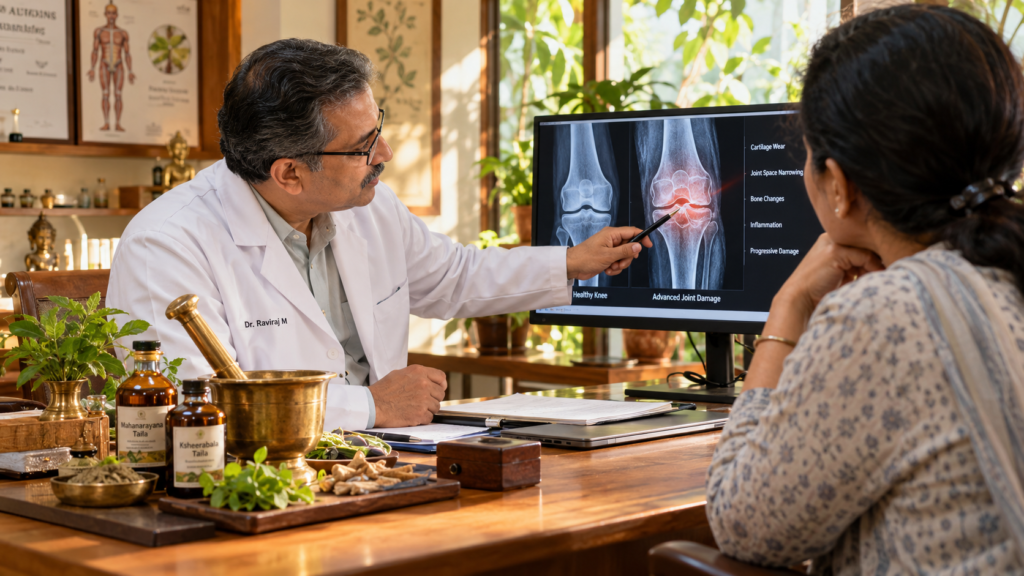
Table of Contents
5 Warning Signs of Arthritis Most People Ignore: Ayurvedic Guide to Early Joint Care
Every year on World Arthritis Day, orthopedic and Ayurvedic clinics highlight a vital reality: joint degeneration rarely strikes overnight. It begins with subtle, seemingly harmless daily discomforts that most individuals brush aside as “just getting older,” poor posture, or simple exhaustion.
As Dr. Raviraj M, Chief Ayurvedic Physician at Vedam Ayurveda Multispecialty Hospital, highlights, catching joint changes at the earliest stage makes all the difference in preventing permanent cartilage wear, loss of mobility, and chronic joint deformities.
If your joints are sending distress signals, dismissing them can lead to deep-seated inflammation. Here are the 5 subtle warning signs of arthritis most people ignore, what they indicate through the diagnostic lens of Ayurveda, and how holistic intervention can halt their progression.
The 5 Early Signs of Arthritis Most People Ignore
The 5 Early Signs of Arthritis Most People Ignore
Clinical Presentation & Classical Ayurvedic Root Cause (Vedam Ayurveda)
Morning Stiffness Lasting More Than 30 Minutes
Experiencing stiff, rigid fingers or knees when stepping out of bed that take 30 to 45 minutes or longer to ease up is one of the earliest clinical indicators of inflammatory arthritis.
- The Ayurvedic Perspective: In classical Ayurveda, morning stiffness is known as Stambha. During nighttime rest, our metabolic fire (Agni) slows down. When undigested metabolic endotoxins (Ama) circulate through the bloodstream, they settle into resting joints. Under the cold, dry qualities of early-morning Vata, this sticky toxin turns rigid, freezing joint flexibility until movement and warmth temporarily dislodge it.
Swelling That Doesn’t Fully Subside
Occasional puffiness after an intense workout or long trek usually resolves within 24 to 48 hours. However, joint swelling that lingers around your knuckles, wrists, or knees without a traumatic injury is an alarming sign.
- The Ayurvedic Perspective: Persistent swelling indicates active Shopha or inflammation driven by Pitta-Ama and Kapha accumulation in the synovial space (Sandhis). Over time, this fluid buildup alters intra-articular pressure, stressing the surrounding ligaments.
Joint Pain That Returns to the Exact Same Spot Repeatedly
Pain that migrates across different body parts can be generalized fatigue, but recurring, throbbing pain that anchors consistently in one specific joint such as your right knee, base of the thumb, or hip—is a classic warning.
- The Ayurvedic Perspective: Repeated localized pain (Sandhi Shoola) signifies localized tissue depletion (Dhatu Kshaya) in the bone (Asthi) and marrow (Majja) channels. In classical terms like Sandhigata Vata (Osteoarthritis) or Amavata (Rheumatoid Arthritis), this marks the focal zone where joint wear is actively advancing.
A Clicking or Grinding Sensation During Movement (Crepitus)
Feeling or hearing a faint crack, grind, or crunch when squatting, climbing stairs, or bending your wrists indicates that the smooth protective cartilage is eroding.
- The Ayurvedic Perspective: Healthy joints rely on Shleshaka Kapha the biological fluid that lubricates cartilage and acts as natural shock absorption. When aggravated Vata enters the joint space, it dries up this protective lubricant, leading to bone-on-bone friction and sound (Sandhi Sphutana).
Reduced Grip Strength in Daily Tasks
Finding it unexpectedly difficult to open a tight jar, wring out a wet cloth, turn a door key, or lift a skillet is frequently an early sign of hand arthritis.
- The Ayurvedic Perspective: Grip weakness highlights that chronic micro-inflammation is extending from the synovial lining into adjacent tendons, ligaments (Snayu), and muscle attachments (Mamsa), impairing nerve conduction governed by Vyana Vayu.
Why Dismissing Early Symptoms Accelerates Joint Damage
As Dr. Raviraj M points out, none of these signs alone automatically mean you have severe, advanced arthritis. However, when they occur together or persist for weeks, they require clinical screening rather than dismissal.
The Cascade of Untreated Joint Damage
How delaying clinical evaluation turns manageable stiffness into chronic structural loss
⚠ Ignored / Masked with Painkillers
⚠ Delayed Medical Intervention
⚠ Advanced Degradation
Relying exclusively on non-steroidal anti-inflammatory drugs (NSAIDs) temporarily masks nerve pain without resolving underlying metabolic toxins or slowing cartilage breakdown. Over time, progressive bone-on-bone friction can lead to irreversible structural changes.
How Ayurveda Halts Joint Degeneration at the Root
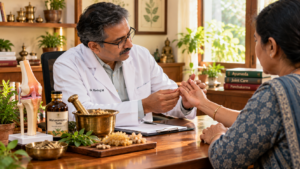
Ayurvedic joint management does not believe in a one-size-fits-all approach. Early therapeutic intervention focuses on clearing endotoxins, cooling synovial heat, and nourishing depleted cartilage:
Metabolic Detoxification (Deepana-Pachana)
Before introducing heavy joint nourishment, circulating Ama must be eliminated using natural carminative formulations (such as Shunthi, Shallaki, and Guggulu). This brings down systemic ESR and CRP markers.
Specialized External Therapies (Bahya Chikitsa)
- Janu Basti / Kati Basti: Retaining warm, medicated herbal oils inside an herbal paste ring placed directly over affected knees or spine to nourish depleted Shleshaka Kapha.
- Valuka Sweda / Patra Pinda Sweda: Warm sand or herbal poultice fomentation to relieve joint swelling and morning stiffness without aggravating inflammation.
- Kashaya Dhara: Medicated decoction streams poured over hot, throbbing joints to reduce localized burning.
Regenerative Bio-Purification (Panchakarma & Rasayana)
Targeted Panchakarma procedures specifically Tikta Ksheera Basti (medicated milk-oil enemas formulated with bitter herbs) deliver essential calcium and lipid nourishment directly to the colon, which Ayurveda identifies as the primary seat of bone metabolism (Asthi Vaha Srotas). This protocol halts degeneration, improves joint space, and restores fluid range of motion.
Book a Comprehensive Joint Health Screening in Bangalore
Catching joint degeneration early is the key to preserving a lifetime of natural, pain-free mobility. If you or a loved one is experiencing morning stiffness, clicking knees, or weakened grip strength, timely clinical evaluation can prevent long-term damage.
Consult seasoned joint specialists at Vedam Ayurveda Multispecialty Hospital in Bangalore. Led by Dr. Raviraj M—a recognized specialist in joint disorders and spine care—our team provides comprehensive diagnostic screenings, classical Panchakarma, and targeted herbal rehabilitation.
- Direct Helpline: +91 70900 00218
- Book an Appointment: Visit Vedam Ayurveda to schedule your joint health consultation today!
Frequently Asked Questions (FAQs)
1. How do I know if my joint stiffness is arthritis or just fatigue?
Normal morning grogginess or muscular fatigue typically resolves within 5 to 10 minutes of walking and gentle stretching. Joint stiffness from inflammatory arthritis, however, persists for 30 minutes or longer and is often accompanied by swelling, warmth, or tender knuckles.
2. Can clicking joints (crepitus) be cured without surgery?
If addressed during early stages before complete cartilage breakdown occurs, crepitus can be managed effectively. Ayurvedic therapies like Janu Basti combined with Ksheerabala or Mahanarayana formulations nourish intra-articular fluids (Shleshaka Kapha), reducing friction and slowing structural degeneration.
3. Which foods should I avoid if my joints feel stiff in the morning?
Avoid foods that generate metabolic endotoxins (Ama) and aggravate Vata-Kapha: sour curds, cold refrigerated drinks, deep-fried snacks, processed sugars, refined flour, and heavy night meals. Favor warm cooked foods seasoned with ginger, cumin, garlic, and turmeric.
4. Is walking safe if I have early knee arthritis?
Yes, moderate low-impact walking on flat, even surfaces is encouraged. It promotes synovial fluid circulation without overburdening joint cartilage. However, avoid steep inclines, uneven ground, or high-impact jumping during active flare-ups.
5. How does Ayurveda differentiate between Osteoarthritis and Rheumatoid Arthritis?
Osteoarthritis (Sandhigata Vata) is primarily a degenerative wear-and-tear condition where Vata dries out joint lubrication without deep systemic fever.
Rheumatoid Arthritis (Amavata) is an autoimmune condition where toxic Ama combines with Vata, resulting in severe morning stiffness, systemic fatigue, burning sensations, and elevated inflammatory markers.