Is Rheumatoid Arthritis Treatable Naturally?
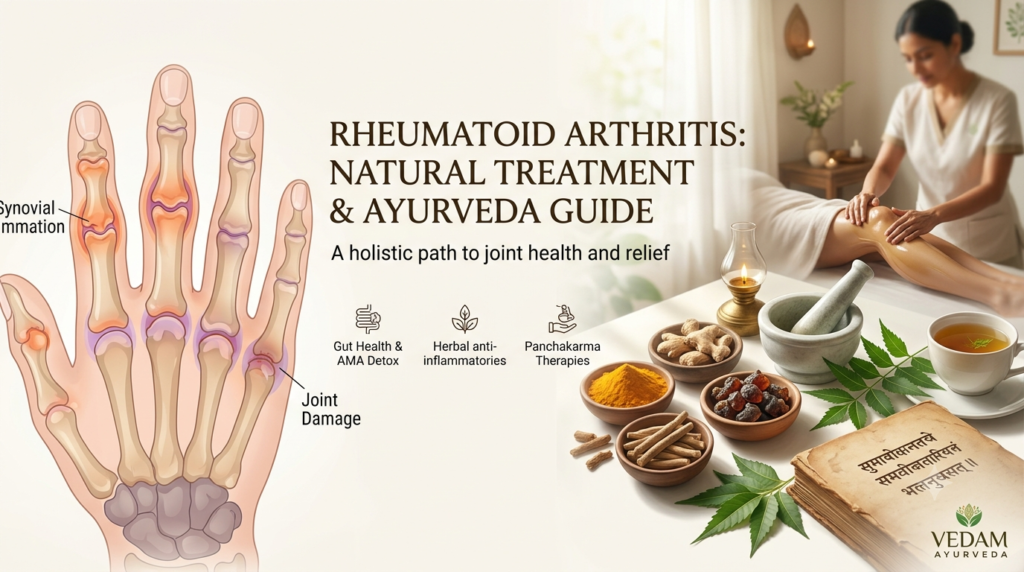
Table of Contents
Is Rheumatoid Arthritis Treatable Naturally? An In-Depth Look at Ayurvedic Healing
 ‘
‘
Waking up with stiff, throbbing fingers, burning wrists, or painful knees that refuse to bend is a daily reality for millions battling Rheumatoid Arthritis (RA). Because conventional management frequently relies on long-term painkillers, corticosteroids, or disease-modifying antirheumatic drugs (DMARDs) which carry risks of hepatic strain, gastrointestinal irritation, or immune suppression many individuals ask:
Can Rheumatoid Arthritis be treated naturally?
The short answer is: Yes, RA can be managed effectively and safely through holistic, natural systems like Ayurveda. While autoimmune destruction requires prompt, structured medical intervention rather than unguided home remedies, natural medicine treats the physiological triggers behind chronic inflammation instead of merely suppressing joint pain.
Understanding Rheumatoid Arthritis: The Modern vs. Ayurvedic View
The Modern Medical View
Modern medicine classifies RA as a chronic, systemic autoimmune disorder. The immune system mistakenly attacks the synovium, the delicate cellular membrane lining the joints. This results in persistent inflammation, synovial thickening, cartilage degradation, and eventual bone erosion.
The Classical Ayurvedic View (Amavata)
In classical Ayurveda, Rheumatoid Arthritis corresponds to Amavata (Ama = toxic metabolic byproduct + Vata = biological humor governing movement).
When digestion (Agni) is impaired due to inconsistent meal patterns, incompatible foods (Viruddha Ahara), or chronic stress, undigested food ferments into a toxic, sticky residue called Ama. Aggravated Vata dosha mobilizes this Ama into systemic circulation, depositing it in vulnerable joint spaces (Sandhis). This triggers localized swelling, severe stiffness (Stambha), burning sensations, and intense pain akin to a scorpion sting (Vrishchika Damsha Vath Vedana).
How Natural Ayurvedic Treatment Reverses the Cycle of Amavata
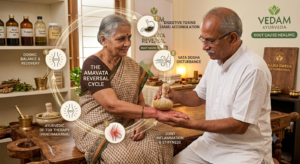
Natural healing for RA does not involve taking a single “magic herb.” It requires a multi-stage therapeutic process to eliminate toxins, balance digestion, and modulate abnormal immune activity:
Eliminating Systemic Endotoxins (Langhana & Deepana-Pachana)
Before any therapeutic oil massage or nourishment is introduced, the body must break down and digest accumulated Ama. This is accomplished through:
- Fasting or Light Liquid Diets (Langhana): Giving the digestive system a reset with warm barley or mung bean soups.
- Appetite & Metabolic Stimulants (Deepana-Pachana): Herbal formulations such as Shunthi (dry ginger), Pippali, and Chitrakadi Vati to reignite metabolic fire.
2. Specialized External Therapies for Pain & Stiffness
Unlike non-inflammatory osteoarthritis (where warm heavy oil massages are applied early), active Amavata requires dry or decoction-based therapies:
- Valuka Sweda: Dry sand poultice fermentation that relieves acute joint swelling and stiffness without aggravating moisture/Ama.
- Kashaya Dhara: Pouring warm, medicated herbal decoctions continuously over inflamed joints to soothe throbbing pain.
- Upanaha: Application of warm, detoxifying herbal pastes over tender joint areas.
3. Bio-Purification (Panchakarma)
Once Ama is softened, classical Panchakarma therapies systematically flush toxins out of the tissues:
- Virechana (Therapeutic Purgation): Rids the liver and intestines of inflammatory Pitta-Ama compounds.
- Vasti (Medicated Enemas): Classical enema protocols (such as Kshara Vasti and Anuvasana Vasti) are considered the gold standard for pacifying systemic Vata and repairing joint mobility at the systemic root.
4. Immune Regulation & Joint Protection (Rasayana)
Herbal extracts like Shallaki (Boswellia serrata), Guggulu (Commiphora mukul), Ashwagandha, and Guduchi (Tinospora cordifolia) act as potent natural immunomodulators and natural COX-2 inhibitors, calming inflammatory flares without compromising overall immunity.
Where to Find the Best Rheumatoid Arthritis Treatment in Bangalore
Successful recovery from RA requires professional monitoring, periodic assessment of inflammatory markers (such as ESR and CRP), and customized treatment staging.
For those seeking the Best Rheumatoid Arthritis Treatment in Bangalore, Vedam Ayurveda Multispecialty Hospital provides clinically supervised, authentic care. Led by seasoned specialists like Dr. Raviraj M widely regarded as one of the Best Rheumatoid Arthritis Treatment Doctors In Bangalore the clinical team creates personalized treatment protocols combining dietary modifications, Panchakarma therapies, and targeted herbal compounds to restore pain-free joint movement.
Take Control of Your Joint Health
Living with Rheumatoid Arthritis does not mean resigning yourself to progressive immobility or a lifetime of heavy pain relief medications. With timely, natural, root-cause intervention, lasting joint restoration and freedom of movement are achievable.
To explore individualized care, consult a trusted ayurvedic doctor for rheumatoid arthritis in bangalore and discover the specialized rheumatoid arthritis treatment in bangalore at Vedam Ayurveda.
Frequently Asked Questions (FAQs)
1. What Is The Most Effective Treatment For Rheumatoid Arthritis?
The most effective approach combines early clinical diagnosis with a comprehensive, root-cause protocol. In Ayurveda, this involves Deepana-Pachana (digestive and metabolic clearance of Ama), followed by Panchakarma (specifically Virechana and Kshara Vasti), anti-inflammatory herbal formulations like Shallaki and Guggulu, and anti-inflammatory lifestyle changes.
This structured natural methodology halts progression, alleviates severe pain, and restores functional joint flexibility without drug dependence.
2. Can I Live A Normal Life With RA?
Yes. With early intervention, proper therapeutic management, and committed lifestyle adaptations, individuals with RA can achieve sustained clinical remission, prevent joint deformities, maintain rewarding careers, and lead fully active, fulfilling lives.
3. What are the four stages of rheumatoid arthritis?
- Stage 1 (Early Stage): The synovial lining becomes inflamed; joint stiffness and pain occur, but X-rays reveal no bone destruction.
- Stage 2 (Moderate Stage): The inflammation begins thinning the joint cartilage; range of motion narrows.
- Stage 3 (Severe Stage): Cartilage destruction leads to bone-on-bone friction, persistent swelling, and visible joint deformities.
- Stage 4 (End Stage / Terminal): The joint space is completely lost, causing fibrous or bony fusion (ankylosis), leading to severe immobility.
4. What Type Of Exercise Is Best For People With Rheumatoid Arthritis?
Low-impact exercises that improve joint range of motion without stressing inflamed cartilage are ideal:
- Water aerobics or swimming: Relieves gravitational pressure on weight-bearing joints.
- Gentle Yoga & Sukshma Vyayama: Promotes synovial circulation and mobility.
- Walking on flat surfaces: Preserves cardiovascular fitness and bone density.
- Avoid: High-impact jumping, heavy weightlifting during active flare-ups, and intense running.
5. Can Diet Alone Cure Or Manage Rheumatoid Arthritis?
While diet cannot single-handedly cure RA, it is an essential pillar of long-term disease control. An anti-Amavata diet eliminates gut-irritating foods (such as refined sugar, deep-fried snacks, processed dairy, sour curds, and nightshades) and emphasizes anti-inflammatory, digestive-friendly foods like warm mung dal, barley, cooked seasonal vegetables, ginger, garlic, and turmeric.
6. How Does Ayurveda Differ From Conventional RA Treatments Like Dmards?
Conventional DMARDs and biologics work primarily by suppressing targeted pathways in the immune system to blunt inflammation. While they offer vital crisis management, they often require indefinite usage and carry potential side effects.
Ayurvedic treatment seeks to regulate the immune system by eliminating underlying metabolic waste (Ama), optimizing digestive fire (Agni), and revitalizing damaged tissues through natural Rasayana therapy.
7. How Long Does Ayurvedic Treatment Take To Show Results In RA?
Initial relief from acute morning stiffness, fatigue, and swelling is often noticeable within 3 to 4 weeks of structured internal medicine and external therapies (like Valuka Sweda).
Achieving deep metabolic correction, normalizing ESR/CRP markers, and stabilizing long-term remission generally requires a sustained clinical course of 3 to 6 months, depending on the chronicity and stage of the condition.