Safe and Effective Management of Psoriasis Through Ayurveda
Table of Contents
Safe and Effective Management of Psoriasis Through Ayurveda
Living with psoriasis often feels like an unending battle against your own skin. The sudden appearance of thick, red plaques covered with silvery scales, paired with persistent itching and burning, affects much more than physical comfort, it impacts emotional well-being and daily confidence.
While conventional dermatological treatments rely on topical corticosteroids, immunosuppressants, or systemic biologics to manage flare-ups, these frequently function as temporary suppression rather than a lasting solution.
For individuals seeking sustainable, long-term remission without drug dependency, classical psoriasis ayurveda therapies offer a time-tested, root-cause medical protocol.
Understanding Psoriasis Through the Lens of Ayurveda
In classical Ayurvedic texts, psoriasis is primarily correlated with Kitibha Kushtha or Ekakushtha, categorized under Kshudra Kushtha (chronic dermatological disorders).
Unlike modern dermatology, which views psoriasis strictly as an autoimmune condition of hyperactive skin cell replication, Ayurveda looks deeper into systemic metabolic dysfunction:
- Tridoshic Involvement: Psoriasis involves a complex imbalance of Vata (causing dryness, silvery flaking, and skin cracks) and Kapha (causing epidermal thickening, scaling, and deep itching / Kandu), accompanied by Pitta aggravation (triggering burning heat and inflammation).
- Formation of Ama (Endotoxins): Weakened digestive fire (Mandagni) leads to improperly digested food byproducts (Ama), which enter circulation.
- Tissue Degradation (Dhatu Dushti): Circulating endotoxins deeply vitiate the Rasa (lymph), Rakta (blood), Mamsa (muscle tissue), and Lasika (interstitial fluids), ultimately manifesting on the surface as hyper-proliferating epidermal plaques.
Core Pillars of Ayurvedic Treatment for Psoriasis
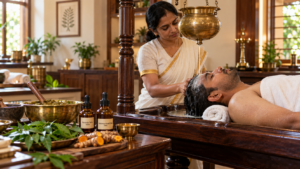
An authentic ayurveda treatment for psoriasis is structured into distinct clinical phases designed to clear cellular metabolic waste, calm inflammatory immune triggers, and regenerate damaged tissue layers.
1. Internal Bio-Purification (Shodhana / Panchakarma)
Because psoriasis is classified as a deep-seated tissue disorder, surface application alone is never enough. Classical Panchakarma systematically purges metabolic impurities:
- Snehana & Swedana: Internal administration of bitter medicated clarified butter (such as Panchatikta Ghrita) binds fat-soluble toxins, followed by therapeutic herbal steam baths (Swedana) to loosen debris from bodily channels (Srotas).
- Vamana (Therapeutic Emesis): Indicated for Kapha-dominant plaques to clear upper gastric and chest congestion.
- Virechana (Therapeutic Purgation): Classical cleansing of the liver, small intestine, and blood tissue (Rakta Shodhana), which is essential for calming burning sensations and reducing active flare-ups.
- Takradhara: Medicated buttermilk decoctions poured continuously over the forehead or affected body parts to alleviate neuro-dermatological stress, cool systemic heat, and soften thick crusts.
2. Classical Internal Formulations (Shamana Chikitsa)
Potent herbal combinations work systemically as natural blood cleansers (Raktashodhaka) and immunomodulators:
- Khadira (Acacia catechu): Revered in classical texts as the ultimate herb (Kushthaghna) for persistent skin conditions.
- Manjistha (Rubia cordifolia): Cools overheated blood and clears lingering cellular toxins.
- Neem (Azadirachta indica): Provides antimicrobial, detoxifying, and anti-inflammatory properties.
- Formulations: Mahamanjisthadi Kwath, Patolakaturohinyadi Kwath, Kaishore Guggulu, and Arogyavardhini Vati.
3. External Barrier Care (Bahya Chikitsa)
To hydrate dry lesions, calm persistent itching, and restore the skin’s lipid barrier without thinning the epidermal layers:
- Daily application of classical oils like Karanja Taila, Mahamarichyadi Taila, or Khadiradi Taila.
- Cooling herbal pastes (Lepas) made with sandalwood, neem, and turmeric to reduce localized heat and silver scaling.
Clinical Benefits: What Makes Ayurvedic Management Safe?
- Zero Risk of Skin Thinning: Unlike chronic topical steroid applications that thin the skin and induce rebound dermatitis, Ayurvedic herbal oils preserve and nourish the epidermal mantle.
- Tackles Autoimmunity at the Gut Level: By treating impaired digestion (Agni), Ayurveda halts the influx of toxic macromolecules into systemic circulation, stabilizing erratic immune activity.
- Extended Remission Periods: Addressing both internal toxicity and psychological stress leads to progressively fewer, milder, and more manageable flare-ups.
Consult a Trusted Ayurvedic Doctor for Psoriasis in Bangalore
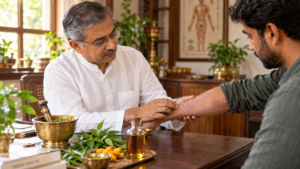
Because every individual’s doshic constitution (Prakriti) and disease state (Vikriti) are unique, generic home remedies or off-the-shelf creams rarely succeed against chronic psoriasis.
If you are looking for authentic, physician-supervised Psoriasis ayurveda treatment in Bangalore, Vedam Ayurveda Multispecialty Hospital provides comprehensive Panchakarma therapies, blood-purifying protocols, and personalized dietary regimens.
Book a dedicated psoriasis treatment consultation with Dr. Raviraj M a senior physician and leading skin specialist at Vedam Ayurveda. You can directly contact Ayurvedic doctor for psoriasis to build a customized, lasting roadmap to clear, calm, and healthy skin. Learn more about their clinical offerings at Vedam Ayurveda.
Frequently Asked Questions (FAQs)
1. What Organ Is Responsible For Psoriasis?
While modern medicine identifies psoriasis as an immune system disorder involving overactive T-cells that accelerate skin cell growth, Ayurveda highlights the liver (Yakrit) and the gut (Grahani) as the primary organs of origin.
The liver processes metabolic toxins; when overloaded by impaired digestive fire (Mandagni), it dumps unneutralized toxins (Ama) into the bloodstream (Rakta Dhatu), which eventually deposit into skin tissue layers.
2. How Can I Reduce Psoriasis Naturally?
Natural management requires a balanced internal and external approach:
- Consume a clean, cooling, anti-inflammatory diet rich in bitter vegetables, cooked gourds, and warm water.
- Strictly avoid trigger foods: sour curds, fermented batters, deep-fried snacks, excess red meat, and incompatible food combinations (Viruddha Ahara like milk and fish).
- Keep lesions deeply moisturized using natural virgin coconut oil or medicated oils like Karanja Taila.
- Manage emotional stress through daily Pranayama (such as Anulom Vilom and Sheetali) and adequate restorative sleep.
3. What Was Swami Ramdev’s Treatment For Psoriasis?
Swami Ramdev’s widely discussed Ayurvedic regimen emphasizes deep internal purification alongside strict lifestyle management.
His protocol includes drinking fresh bottle gourd (Lauki) juice mixed with neem, giloy, and aloe vera on an empty stomach, taking blood-purifying formulations like Kayakalp Vati, Neem Ghanvati, and Khadirarishta, and applying Kayakalp Taila externally.
He strongly stresses rigorous daily practice of Pranayama (Kapalbhati and Anulom Vilom) and complete elimination of refined salt, sugar, dairy, and oily foods.
4. Is Psoriasis 100% Curable?
In modern medical science, psoriasis is classified as a chronic, incurable autoimmune disease with remissions and relapses.
In Ayurveda, while genetic or longstanding (Asadhya) psoriasis requires continuous management, early to moderate conditions (Krichrasadhya) can be driven into deep, sustained clinical remission.
By eliminating metabolic toxins through Panchakarma and adhering to prescribed dietary habits, many patients live completely symptom-free lives without visible plaques.
5. How Long Does Ayurvedic Treatment Take To Show Visible Improvements?
Initial relief such as reduced itching (Kandu), decreased scaling, and reduced burning sensation is usually seen within 3 to 4 weeks.
However, comprehensive cellular healing, skin barrier restoration, and systemic detoxification generally require a guided program lasting 3 to 6 months, depending on how long the condition has persisted and prior steroid usage.
6. Can Panchakarma Trigger A Healing Crisis Or Worsen Lesions Temporarily?
During the preparatory phase (Snehana and Swedana), accumulated toxins (Ama) are mobilized from deeper tissues into the circulatory tract. In some cases, this rapid movement of metabolic heat can cause a brief, mild initial flare-up or slight redness.
Under professional supervision, this temporary stage quickly subsides once primary elimination (Virechana or Vamana) is completed, paving the way for clear skin.
7. Is Scalp Psoriasis Treated Differently In Ayurveda?
Yes. Scalp psoriasis (Kitibha Kushtha of the scalp) often involves a heavier Kapha-Vata presentation with thick, dandruff-like silver plaques.
In addition to internal blood purifiers, external treatments such as Shiro Abhyanga (medicated head massage with Kshirabala or Dhurdhura patradi oil), Shirodhara, and herbal hair washes using decoctions of Triphala and Khadira are used to soften scaling without stripping the scalp’s moisture barrier.