ayurvedic-approaches-holistic-management-pcos-pcod
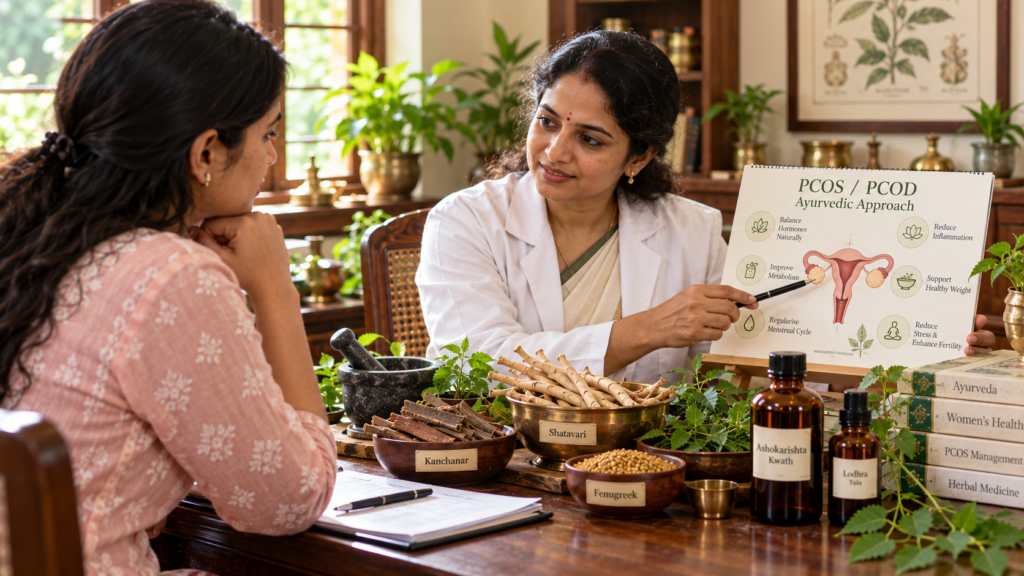
Table of Contents
- Understanding PCOS and PCOD: Modern Science vs. Classical Ayurveda
- The Ayurvedic Protocol for PCOS/PCOD: Root-Cause Reversal
- Potent Ayurvedic Formulations & Single Herbs for PCOS
- Dietary and Lifestyle Guidelines (Pathya-Apathya) for PCOS
- Holistic Gynecological Care at Vedam Ayurveda, Bangalore
- Frequently Asked Questions (FAQs)
Ayurvedic Approaches for Holistic Management of PCOS/PCOD
Irregular cycles, stubborn weight gain, unexplained facial hair, cystic acne, and the emotional exhaustion of unpredictable hormone fluctuations polycystic ovarian syndrome (PCOS) and polycystic ovarian disease (PCOD) have rapidly become some of the most widespread endocrine and reproductive challenges affecting modern women.
While conventional medicine frequently relies on oral contraceptive pills (OCPs) to artificially induce bleeding, metformin for insulin regulation, or hormone blockers for androgen excess, these interventions largely manage surface symptoms. The moment synthetic hormones are discontinued, irregular periods and metabolic imbalances often return.
Classical Ayurveda views endocrine health through a completely different paradigm. Rather than forcing the body into artificial hormonal rhythms, an authentic Ayurveda treatment for PCOS addresses root metabolic imbalances, clears reproductive channel blockages, regulates insulin resistance, and revitalizes natural ovarian function from within.
Understanding PCOS and PCOD: Modern Science vs. Classical Ayurveda
Although commonly used interchangeably, PCOD and PCOS carry subtle clinical distinctions:
- PCOD (Polycystic Ovarian Disease): Primarily a condition driven by hormonal imbalance where the ovaries release immature or partially mature eggs, turning into multiple small benign cysts. It can often be corrected with targeted lifestyle modifications, diet adjustments, and cyclic herbal therapy.
- PCOS (Polycystic Ovarian Syndrome): A more complex metabolic and endocrine syndrome involving severe hyperandrogenism (elevated male hormones), chronic anovulation, profound insulin resistance, and higher risks of cardiovascular strain and metabolic syndrome.
The Ayurvedic Perspective: Artava Kshaya & Yonivyapad
In classical Ayurvedic medical literature, PCOS and PCOD do not exist as a single isolated diagnosis, rather, their symptoms align with Artava Kshaya (deficiency or loss of menstrual fluid), Nashtartava (amenorrhea/lack of ovulation), and specific types of Yonivyapad (gynecological and reproductive disorders), frequently linked to Granthi (cystic follicular swelling).
Ayurveda explains this condition as a systemic Tridoshic imbalance centered heavily on Kapha and Vata:
- Kapha Dominance (The Structural Blockage): Excess Kapha leads to heavy, sluggish, and sticky qualities within the body.
This coats the reproductive micro-channels (Artava Vaha Srotas), thickens the ovarian tissue, leads to weight gain, and creates multiple fluid-filled follicular cysts (Granthi) that prevent the egg from maturing and bursting forth.
- Vata Derangement (The Functional Stagnation): Specifically, Apana Vayu the downward-moving energetic sub-dosha governing menstruation, ovulation, and bowel movements becomes blocked and erratic. This stagnation leads to delayed, painful, scanty, or absent menstrual cycles.
- Pitta Involvement (Metabolic & Hormonal Heat): When Pitta becomes aggravated along with hormonal imbalances, it manifests as hyperandrogenic symptoms. cystic facial acne, thinning scalp hair (androgenic alopecia), irritability, and metabolic inflammation.
- The Root: Impaired Agni & Ama (Metabolic Toxins): Sedentary routines, high-glycemic foods, chronic stress, and late-night meals weaken gastric and cellular digestive fire (Jatharagni and Dhatvagni).
Undigested, toxic metabolic waste known as Ama enters the bloodstream, interfering directly with insulin receptors and blocking ovarian cellular communication.
The Ayurvedic Protocol for PCOS/PCOD: Root-Cause Reversal
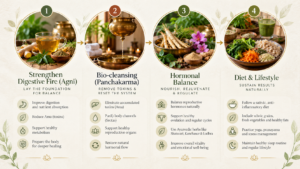
True Ayurvedic restoration of regular ovulatory cycles requires a systematic, phased medical strategy that cleanses deep-seated endotoxins, restores metabolic efficiency, and balances the endocrine axis naturally.
[ Phase 1: Deepana & Pachana ]
Reignite Digestive Fire & Digest Ama
│
▼
[ Phase 2: Shodhana (Panchakarma) ]
Purge Toxins & Unblock Reproductive Srotas
│
▼
[ Phase 3: Shamana & Endocrine Rasayana ]
Regulate Ovulation, Balance Androgens & Rebuild Dhatus
│
▼
[ Phase 4: Pathya-Apathya & Ahara ]
Sustain Metabolic Balance & Prevent Relapse
Preparatory Bio-Cleansing: Rekindling Agni (Deepana-Pachana)
Before any reproductive rejuvenation herbs can be assimilated, the sluggish metabolic state must be reversed. Herbal carminatives like Trikatu (dry ginger, black pepper, long pepper), Chitrakadi Vati, and Varunadi Kwath are prescribed to burn accumulated Ama, reduce sluggish cellular metabolism, and sensitize the body’s cells to natural glucose uptake.
Clinical Panchakarma: Clearing the Reproductive Channels
In chronic, moderate-to-severe PCOS, bio-cleansing (Shodhana) is essential to remove stubborn channel congestion:
- Vamana (Therapeutic Emesis): Indicated for women with high Kapha dominance, marked obesity, severe insulin resistance, and heavy water retention. Clearing excess Kapha from the upper metabolic seat resets hormone pathways.
- Virechana (Therapeutic Purgation): Eliminates deep-seated Pitta and inflammatory toxins from the liver and gallbladder. Since the liver is the primary organ responsible for metabolizing and eliminating excess circulating estrogens and androgens, Virechana is pivotal for clearing hyperandrogenism, facial hirsutism, and hormonal acne.
- Basti (Medicated Enemas – The Master Therapy): Basti is universally regarded in classical gynecology as the premier therapy for reproductive balance. Classical protocols such as Lekhana Basti (scraping enemas to dissolve cysts and reduce adipose tissue) followed by Matra Basti or Kashaya Basti (with medicated oils like Sahacharadi Taila or Sukumar Ghrita) pacify Apana Vayu, nourish the uterine lining, and systematically stimulate timely follicular release.
- Uttara Basti (Specialized Intrauterine Instillation): In select cases of longstanding chronic anovulation, thin endometrium, or cyst-blocked pathways, specialized sterile herbal decoctions or oils are carefully instilled directly into the uterine cavity under rigorous clinical parameters, promoting direct cellular nourishment.
Potent Ayurvedic Formulations & Single Herbs for PCOS
Classical Ayurveda employs specific multi-herb compounds that work synergistically across metabolic, endocrine, and ovarian pathways:
| Classical Formulation / Herb | Primary Ayurvedic Action | Modern Clinical Relevance |
| Kanchanar Guggulu | Granthi Hara (Dissolves cysts and deep tissue swellings) | Clears ovarian fluid accumulations, supports healthy thyroid and lymphatic function. |
| Varunadi Kwath | Medohara (Reduces excess adipose tissue & Kapha) | Improves insulin signaling, clears sluggishness, and reduces central adiposity. |
| Pushpadhanwa Rasa | Vrishya & Artavajanana (Ovulatory stimulant) | Directly stimulates ovarian follicles, balancing pituitary-ovarian communication. |
| Chandraprabha Vati | Srotoshodhaka (Urinary and pelvic channel cleanser) | Clears lower abdominal stagnation, balances hormones, and enhances energy. |
| Shatavari (Asparagus racemosus) | Rasayana & Artava Vardhaka (Estrogen modulator) | Promotes healthy follicular development, prevents ovarian follicle hyper-atrophy, and nourishes the endometrium. |
| Lodhra (Symplocos racemosa) | Balances Pitta-Kapha; regulates menstrual flow | Lowers excessive testosterone, reduces cystic acne, and normalizes cyclic duration. |
| Haridra (Curcuma longa) & Daruharidra | Lekhana & anti-inflammatory | Highly effective natural insulin sensitizer; curbs systemic low-grade inflammation. |
Dietary and Lifestyle Guidelines (Pathya-Apathya) for PCOS
Long-term management of PCOS requires synchronizing daily habits with natural metabolic cycles:
What to Include (Pathya)
- Wholesome Complex Grains: Replace refined white flour and white rice with barley (Yava), millets (foxtail, ragi, bajra), and unpolished red or brown rice.
- Bitter and Astringent Vegetables: Bitter gourd, ridge gourd, bottle gourd, drumsticks, fenugreek leaves, and spinach to pacify Kapha and clear liver pathways.
- Digestive Spices: Cinnamon (helps reduce insulin resistance), fenugreek seeds, cumin, coriander, and freshly grated ginger in daily cooking.
- Hydration: Warm water infused with fennel or coriander seeds throughout the day.
What to Avoid (Apathya)
- Refined Sugars & High-Glycemic Carbs: Packaged snacks, bakery items, sodas, and excess sweets that spike insulin and trigger ovarian androgen production.
- Heavy, Sluggish Dairy: Thick cow’s milk, store-bought cheese, paneer, and especially thick sour curds (which block bodily micro-channels). Light, freshly churned buttermilk infused with roasted cumin is a therapeutic alternative.
- Incompatible & Cold Foods (Viruddha Ahara): Cold refrigerated foods, iced drinks, raw and uncooked heavy meals at night, and deep-fried fast food.
- Daytime Sleeping (Divaswapna): Highly aggravates Kapha and slows metabolism significantly.
Holistic Gynecological Care at Vedam Ayurveda, Bangalore
PCOS and PCOD are multifaceted conditions that vary widely from woman to woman. A generic internet diet or an unmonitored herbal supplement cannot address the specific doshic constitution, body tissue vitiation, and metabolic blockages unique to your biology.
For structured, authentic PCOD ayurveda treatment in Bangalore, Vedam Ayurveda Multispecialty Hospital offers specialized, physician-guided holistic healthcare.
Combining classical Panchakarma therapies with customized internal medicines, therapeutic dietary protocols, and stress-relieving therapies, the medical team addresses the root triggers of metabolic and reproductive imbalances.
Schedule a detailed PCOD Treatment Consultation to evaluate your health profile, balance your cycles, and restore natural wellness. Contact Ayurvedic Doctor for PCOD/PCOS at Vedam Ayurveda or explore their dedicated Ayurvedic treatment for PCOS and PCOD in Bangalore to start your path toward sustained hormonal balance.
Frequently Asked Questions (FAQs)
1. How to clear PCOD naturally?
Clearing PCOD naturally requires a multi-pronged approach that focuses on restoring metabolic and digestive fire (Agni):
- Dietary Shifts: Transition to low-glycemic, high-fiber, and anti-inflammatory meals comprising millets, warm cooked vegetables, bitter greens, and healthy spices like cinnamon and fenugreek. Eliminate refined sugars, dairy, and deep-fried foods.
- Targeted Physical Activity: Perform at least 45 minutes of daily brisk walking, Surya Namaskar, or strength training to enhance insulin sensitivity and stimulate Apana Vayu.
- Ayurvedic Herbal Formulations: Utilize physician-recommended formulations like Kanchanar Guggulu, Varunadi Kwath, and Lodhra to dissolve ovarian cysts and clear channel blockages.
- Circadian Rhythm Alignment: Sleep by 10:00 PM, wake before sunrise, and avoid sleeping during the daytime to regulate the hypothalamic-pituitary-ovarian (HPO) axis naturally.
2. Is ashwagandha good for PCOD?
Yes, Ashwagandha (Withania somnifera) can be beneficial for women with PCOS/PCOD, particularly when the condition is exacerbated by chronic stress, adrenal fatigue, and sleep disturbances.
As a potent adaptogen, Ashwagandha lowers serum cortisol levels. Because elevated cortisol stimulates the adrenal glands to produce excess androgens (male hormones), regulating cortisol helps reduce stress-induced facial hair, anxiety, and irregular cycles.
However, because Ashwagandha is warming in potency (Ushna Virya), women with high Pitta dominance (severe cystic acne, heavy bleeding, or extreme body heat) should only consume it under professional clinical supervision, often balanced with cooling herbs like Shatavari.
3. Is it possible to cure PCOD permanently?
PCOD can be driven into complete, sustained remission where normal, unmedicated ovulatory cycles return, ovarian morphology normalizes on ultrasound, and metabolic symptoms disappear.
However, because PCOD is an endocrine-metabolic tendency deeply influenced by genetic predisposition and lifestyle, it requires consistent maintenance. If a woman reverts to a sedentary routine, poor dietary choices, and chronic unmanaged stress, the metabolic blockages can recur.
Thus, Ayurveda focuses on long-term lifestyle and dietary adherence (Swastha Vritta) to ensure that the recovery remains permanent and sustainable.
4. Which drink is good for PCOD?
Several natural Ayurvedic herbal infusions support hormonal balance:
- Fenugreek (Methi) Water: Soak 1 teaspoon of fenugreek seeds in a glass of water overnight; drink it warm on an empty stomach in the morning to improve insulin sensitivity and support healthy ovarian function.
- Cinnamon & Cumin Tea: Boil half a teaspoon of Ceylon cinnamon and half a teaspoon of cumin seeds in water; this infusion kindles digestive fire, reduces glucose spikes, and warms the pelvic channels.
- Spearmint Tea: Clinical studies have shown that drinking spearmint tea twice daily helps lower free testosterone levels, assisting in the management of hirsutism and androgenic acne.
- CCF Tea (Cumin, Coriander, Fennel): A classic detoxifying tea that gently flushes Ama, soothes pelvic inflammation, and prevents abdominal bloating.
5. Does stress aggravate PCOS symptoms?
Yes, stress directly impacts the endocrine system through the hypothalamic-pituitary-adrenal (HPA) axis. When stress is chronic, elevated cortisol and adrenaline impair progesterone production, worsen insulin resistance, and stimulate adrenal androgen synthesis.
In Ayurveda, chronic mental stress aggravates Prana Vayu and Vata, which destabilizes the rhythmic actions of Apana Vayu, resulting in missed or delayed periods. Incorporating daily Pranayama (such as Nadi Shodhana and Bhramari), yoga, and therapies like Shirodhara plays a critical role in hormonal stabilization.
6. Can unmarried young women undergo Ayurvedic treatment for PCOD?
Absolutely. Ayurvedic care is completely non-invasive, safe, and tailored to the patient’s age and lifestyle.
Unmarried women and adolescent girls do not undergo invasive procedures like Uttara Basti; instead, treatment focuses on internal herbal medicines, digestive correctors, external detox therapies (such as mild abdominal warm compresses or gentle Abhyanga), and dietary adjustments to ensure natural, pain-free, and regular menstrual cycles without dependency on birth control pills.
7.How long does Ayurvedic treatment take to regulate periods in PCOS?
Because Ayurveda works on cellular turnover and systemic channel clearing rather than forcing chemical withdrawal bleeding, recovery is progressive:
- Months 1 to 2: Digestion improves, bloating decreases, energy levels rise, and insulin sensitivity begins to stabilize.
- Months 3 to 4: Menstrual cycles begin to regulate, pelvic discomfort subsides, and hormonal acne typically calms down.
- Months 4 to 6+: Natural, unmedicated ovulation is established, ovarian morphology improves, and sustained metabolic balance is achieved. The total duration depends on the chronicity of the condition, prior use of synthetic hormones, and adherence to dietary guidance.