Ayurvedic Treatment for Eczema: Natural & Holistic Approach To Eczema
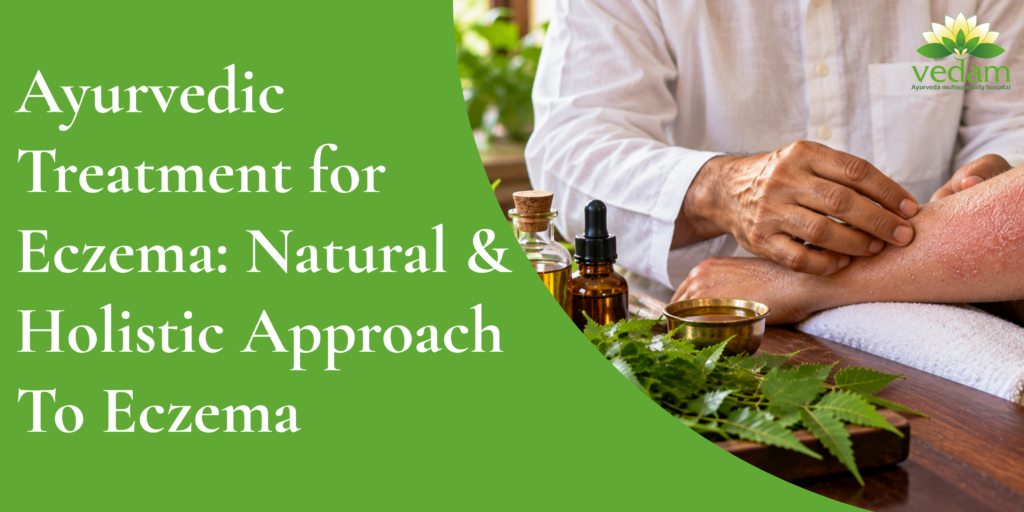
Table of Contents
Ayurvedic Treatment for Eczema: Natural & Holistic Approach To Eczema
Living with eczema is an exhausting daily challenge. The relentless itching, the dry, cracked patches, the sudden inflamed flare-ups, and the anxiety of wondering when the next breakout will occur can severely impact your quality of life.
For many, the conventional route involves an endless cycle of topical steroid creams and immunosuppressants. While these offer quick, temporary relief, they often lead to skin thinning and severe rebound flares the moment you stop using them.
If you are seeking a sustainable, root-cause solution, the classical science of Eczema ayurveda offers a profound alternative. Rather than merely suppressing the external symptoms, an authentic Ayurveda treatment for Eczema works systematically to detoxify the bloodstream, balance hyperactive immune responses, and restore the skin’s natural lipid barrier from the inside out.
What is Eczema in Ayurveda (Vicharchika)?
In classical Ayurvedic texts, eczema is closely correlated with a condition known as Vicharchika, which falls under the broader category of Kshudra Kushtha (minor skin disorders). Ayurveda does not view skin diseases as localized surface issues. Instead, they are the external manifestation of deep-seated internal metabolic imbalances.
Eczema is fundamentally a Tridoshic disorder, meaning it involves an imbalance of all three biological humors (Vata, Pitta, and Kapha), though one dosha usually dominates:
- Vata Dominance: Characterized by extreme dryness, severe scaling, rough skin, and intense, painful cracking.
- Pitta Dominance: Manifests as aggressive redness, burning sensations, inflammation, and heat radiating from the skin patches.
- Kapha Dominance: Presents as thickened, leathery skin, swelling, intense localized itching (Kandu), and weeping or oozing blisters.
The root cause of these imbalances traces back to impaired digestive fire (Mandagni). When digestion is weak due to stress, poor lifestyle, or incompatible food combinations (Viruddha Ahara), the body produces Ama (toxic metabolic waste).
This Ama enters the circulatory system and deeply vitiates the Rasa (plasma), Rakta (blood), and Lasika (lymphatic fluids), eventually depositing in the Twak (skin) to erupt as eczema.
The Holistic Ayurveda Treatment Protocol for Eczema
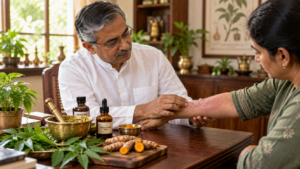
To achieve lasting remission, Ayurvedic intervention requires a comprehensive, multi-staged clinical approach. A customized protocol is designed to arrest inflammation, purge circulating endotoxins, and regenerate healthy dermal tissues.
1. Internal Detoxification (Panchakarma Therapy)
Attempting to heal eczema with creams while the blood remains toxic is like trying to put out a fire while feeding it fuel. Bio-cleansing (Shodhana) is the most critical step for chronic cases.
- Virechana (Therapeutic Purgation): This is the gold standard for Pitta-driven skin disorders. By administering medicated herbs that cleanse the liver and small intestines, Virechana flushes excess heat and inflammatory toxins out of the body.
- Raktamokshana (Blood Purification): For highly stubborn, localized, and severely inflamed eczema patches, controlled blood-letting (often using sterile medicinal leeches, or Jalaukavacharana) immediately relieves burning sensations and clears localized stagnation in the capillaries.
2. Blood Cleansing Herbal Formulations (Shamana Chikitsa)
Following detoxification, internal herbal medicines are prescribed to purify the blood (Rakta Shodhana) and act as natural immunomodulators:
- Manjistha (Rubia cordifolia): A premier blood-cooling herb that clears stagnation and reduces redness.
- Khadira (Acacia catechu): Traditionally revered as the ultimate Kushthaghna (destroyer of skin diseases), promoting rapid tissue healing.
- Neem and Guduchi: Powerful natural antimicrobials that prevent secondary bacterial infections in cracked skin while calming autoimmune overactivity.
3. External Soothing and Barrier Repair (Bahya Chikitsa)
Ayurvedic topical treatments repair the skin barrier without the thinning effects of corticosteroids:
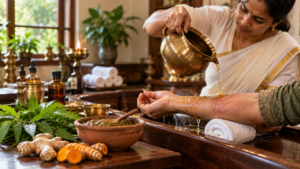
- Kashaya Dhara: Continuous pouring of warm herbal decoctions over the affected areas to wash away crusts, reduce weeping, and break the intense itch-scratch cycle.
- Lepa (Medicinal Pastes): Application of cooling herbal pastes made of sandalwood, turmeric, and aloe vera to instantly pacify burning patches.
- Medicated Tailas (Oils): Oils like Mahamarichyadi Taila, Jatyadi Taila, and Karanja Taila are applied to lock in deep moisture, repair the compromised lipid mantle, and prevent Vata-induced cracking.
4. Dietary and Lifestyle Corrections (Pathya-Apathya)
A successful Ayurvedic protocol is heavily dependent on dietary discipline. Patients are advised to strictly avoid sour foods, fermented products (like yogurt and idli/dosa batters), excessively spicy curries, deep-fried snacks, and incompatible combinations like eating fish with milk.
The diet should be cooling, easily digestible, and rich in bitter vegetables (like bitter gourd) and clarified butter (Ghee) to soothe internal dryness.
Eczema Ayurveda Treatment at Ayurvedic Hospitals
Healing chronic eczema requires precision, patience, and professional medical guidance. Attempting to manage severe flare-ups with unguided home remedies can often aggravate the doshas further.
If you are looking for authentic, clinically supervised care, Vedam Ayurveda Multispecialty Hospital provides comprehensive Eczema ayurveda treatment in Bangalore. Combining classical Panchakarma therapies with personalized lifestyle management, the hospital focuses on eradicating the disease at its metabolic root rather than merely managing surface symptoms.
Take the first step toward lasting, steroid-free skin health. Schedule an Eczema Treatment Consultation with Dr. Raviraj M, our Chief Physician and highly regarded Ayurvedic skin specialist. Do not let chronic itching control your life—Contact Ayurvedic Doctor for Eczema today, or visit Vedam Ayurveda to discover how holistic healing can restore your skin’s natural health and resilience.
Frequently Asked Questions (FAQs)
1. What Kills Eczema Bacteria Naturally?
Individuals with eczema have compromised skin barriers, making them highly susceptible to Staphylococcus aureus bacterial infections. Naturally, Neem (Azadirachta indica) and Turmeric (Curcuma longa) are two of the most potent antimicrobial herbs used in Ayurveda to kill skin bacteria.
When applied as a paste or infused in oil, they destroy harmful pathogens while reducing inflammation. Pure cold-pressed virgin coconut oil also contains lauric acid, a natural antibacterial agent that protects open eczema cracks.
2. What Is The 3 Minute Rule For Eczema?
The “3-minute rule” is a critical dermatological habit for eczema management. It states that you must apply a thick layer of moisturizer, emollient, or medicated Ayurvedic oil within three minutes of stepping out of a lukewarm bath or shower.
Bathing hydrates the skin, but if left exposed to the air, that moisture rapidly evaporates, leaving the skin drier than before. Applying oil within this 3-minute window locks in the ambient hydration and repairs the protective lipid barrier.
3. Is Eczema 100% Curable?
In conventional medicine, eczema (atopic dermatitis) is considered a chronic, incurable autoimmune condition that can only be managed.
In Ayurveda, the prognosis depends on the chronicity and genetic involvement. Early-stage and lifestyle-induced eczema can often be driven into complete, sustained remission (essentially a functional cure) through Panchakarma detoxification.
For highly chronic or hereditary cases, Ayurveda offers exceptional, long-term management that keeps the skin clear and symptom-free for years, provided the patient adheres to specific dietary rules.
4. Which Herb Is Best For Eczema?
While multiple herbs are used synergistically, Khadira (Acacia catechu) and Manjistha (Rubia cordifolia) are considered the absolute best internal herbs for purifying the blood and resolving deep skin inflammation.
For external application and bacterial defense, Neem is unparalleled in its ability to soothe intense itching and heal weeping lesions.
5. Can Stress Trigger An Eczema Flare-Up?
Yes, psychological stress is a major trigger for eczema. Stress causes the body to release cortisol and adrenaline, which subsequently triggers an inflammatory immune response and increases skin barrier permeability.
In Ayurveda, stress aggravates Vata dosha, leading to sudden, intense bouts of dryness and itching. Therapies like Shirodhara (oil pouring on the forehead) are often integrated into eczema treatment to calm the nervous system.
6. Does Diet Actually Affect Eczema Breakouts?
Absolutely. In Ayurveda, clear skin begins in the gut. Consuming inflammatory foods directly translates to inflamed skin.
High-sugar foods, processed dairy, excessive salt, deep-fried items, and highly acidic or fermented foods increase Pitta and Kapha in the blood, acting as direct catalysts for eczema flares. Transitioning to a cooling, alkaline, and easily digestible diet is non-negotiable for healing.
7. How Long Does Ayurvedic Treatment Take For Eczema?
Because Ayurveda treats the metabolic root rather than suppressing the surface, it takes time. Initial relief such as a reduction in burning, weeping, and intense itching is typically noticed within 3 to 4 weeks of starting internal herbs and external oil applications.
However, to achieve full blood purification, cellular turnover, and sustained remission, a dedicated treatment protocol generally requires 3 to 6 months, depending on the severity of the condition and prior history of steroid use.