
Why Is Psoriasis So Itchy? Causes, Relief & Natural Ways to Stop Itching

Table of Contents
- Why Is Psoriasis So Itchy?
- Why psoriasis itching becomes intense
- Why Does Psoriasis Itch More at Night?
- The Psoriasis Itch Scratch Cycle
- Common Triggers That Make Psoriasis Itch Worse
- How to Stop Psoriasis Itching Naturally
- How Does Ayurveda Help Relieve Psoriasis Itching?
- Foods That May Help Support Skin Health
- When Should You See a Doctor?
- Why Choose Personalised Psoriasis Treatment?
- Conclusion
- Frequently Asked Questions for Psoriasis Itchier
Quick Answer: Psoriasis is itchy because inflammation caused by an overactive immune system irritates the skin and nerve endings. Dryness, damaged skin barrier, stress, and flare-ups can make the itching worse. Managing inflammation, keeping the skin moisturised, avoiding triggers, and following a personalised treatment plan may help provide long-term psoriasis itching relief.
Itching is one of the most frustrating symptoms of psoriasis. For many people, the urge to scratch becomes stronger at night, interferes with sleep, affects concentration, and sometimes even causes bleeding or skin infections. While scratching may provide temporary relief, it often worsens inflammation and triggers a vicious itch scratch cycle.
If you’ve been searching “why is psoriasis itchy”, “psoriasis itching relief”, or “how to stop psoriasis itching naturally”, this guide explains the science behind psoriasis itching and how both modern dermatology and Ayurveda approach long-term symptom management.
Disclaimer: This article is for educational purposes only and should not replace consultation with a qualified dermatologist or Ayurvedic physician.
Why Is Psoriasis So Itchy?
Psoriasis itching occurs because the immune system mistakenly activates inflammatory pathways that affect both the skin and the nerve endings responsible for the sensation of itch. Unlike ordinary dry skin, psoriasis itching is driven by chronic inflammation beneath the skin’s surface.
When inflammatory chemicals such as cytokines are released, they stimulate nerve fibres and accelerate skin cell production. As skin cells build up rapidly, thick plaques, scaling, and dryness develop, making the skin even more irritated.
Why psoriasis itching becomes intense
- Chronic skin inflammation
- Dry and cracked skin
- Thick scaly plaques
- Irritated nerve endings
- Skin barrier damage
- Emotional stress during flare-ups
The severity of itching varies from person to person. Some experience mild irritation, while others report severe itching that significantly affects daily life and sleep.
Why Does Psoriasis Itch More at Night?
Many people notice that psoriasis becomes much itchier after going to bed. This is a well recognised pattern and happens for several reasons.
At night, the body’s natural anti-inflammatory hormone (cortisol) decreases, skin loses more moisture, body temperature changes, and there are fewer distractions from the sensation of itching. Stress and anxiety accumulated during the day may also become more noticeable while resting.
Night Time Itch triggers:
| Cause | How it affects itching |
| Reduced skin moisture | Increases dryness and irritation |
| Lower cortisol levels | May increase inflammation |
| Warm bedding | Can aggravate itching |
| Stress & anxiety | Makes itch perception stronger |
| Dry indoor air | Weakens the skin barrier |
Keeping the bedroom cool, moisturising before sleep, and following a consistent bedtime routine may help reduce night-time discomfort.
The Psoriasis Itch Scratch Cycle
One of the biggest reasons psoriasis worsens is repeated scratching. Although scratching temporarily reduces the itch sensation, it damages the skin barrier and creates additional inflammation.
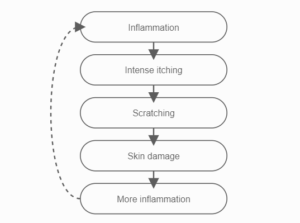
Breaking this cycle is one of the most important goals of effective psoriasis management.
Common Triggers That Make Psoriasis Itch Worse
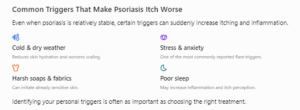
Even when psoriasis is relatively stable, certain triggers can suddenly increase itching and inflammation.
- Cold & dry weather: Reduces skin hydration and worsens scaling.
- Stress & anxiety: One of the most commonly reported flare triggers.
- Harsh soaps & fabrics: Can irritate already sensitive skin.
- Poor sleep: May increase inflammation and itch perception.
Identifying your personal triggers is often as important as choosing the right treatment.
How to Stop Psoriasis Itching Naturally
While there is no instant cure for psoriasis itching, several evidence-based habits may help reduce discomfort and support healthier skin.
1. Moisturise frequently
Keeping the skin hydrated helps reduce dryness, cracking, and irritation. Thick fragrance-free moisturisers generally work better than light lotions.
2. Avoid scratching
Instead of scratching:
- Apply a cold compress
- Gently tap the itchy area
- Keep nails short
- Moisturise immediately after bathing
3. Manage stress
Since stress commonly triggers flare-ups, practices such as meditation, yoga, breathing exercises, and adequate sleep may help improve overall wellbeing.
4. Follow a skin-friendly routine
- Use lukewarm water instead of hot showers.
- Avoid harsh detergents.
- Wear soft cotton clothing.
- Keep indoor humidity comfortable.
These simple measures can complement medical treatment and improve skin comfort.
How Does Ayurveda Help Relieve Psoriasis Itching?
Ayurveda approaches psoriasis by evaluating the individual’s Prakriti (body constitution), dosha imbalance, digestion, lifestyle, and overall health rather than focusing only on itching.
According to Ayurvedic principles, psoriasis-like conditions are associated with disturbances in Vata and Kapha, impaired digestive fire (Agni), and the accumulation of Ama. Treatment is personalised and may include:
- Ayurvedic herbal medicines
- Panchakarma therapies (when appropriate)
- External herbal applications
- Individualised dietary guidance
- Lifestyle modifications
- Stress management practices
The objective is to support long-term skin health while reducing factors that contribute to recurring flare-ups.
Foods That May Help Support Skin Health
Although no single psoriasis diet works for everyone, maintaining a balanced anti-inflammatory eating pattern may support overall health.
Commonly encouraged
- Fresh seasonal vegetables
- Whole grains
- Fresh fruits
- Warm water
- Home-cooked meals
Foods that may require limitation
- Highly processed foods
- Excess refined sugar
- Deep-fried foods
- Excess alcohol
- Individual dietary triggers
Dietary recommendations should always be personalised rather than universally restrictive.
When Should You See a Doctor?
Seek professional medical evaluation if:
- Itching becomes severe or persistent
- Skin begins bleeding frequently
- Plaques become infected
- Sleep is regularly disturbed
- Joint pain develops alongside psoriasis
- Symptoms continue to worsen despite self-care
Early diagnosis allows more effective long-term management and helps distinguish psoriasis from eczema, fungal infections, or other skin conditions.
Why Choose Personalised Psoriasis Treatment?
Because every person experiences psoriasis differently, treatment should never be identical for everyone. A personalised approach considers the type of psoriasis, disease severity, lifestyle, stress levels, and overall health before recommending therapies.
If you’re looking for psoriasis itching relief or comprehensive Psoriasis Ayurvedic Treatment in Bangalore, consulting experienced Ayurvedic physicians can help develop an individualised treatment plan that combines herbal medicines, Panchakarma therapies, dietary guidance, and long-term lifestyle support.
Related Reading: Explore our complete guide on Psoriasis Ayurvedic Treatment in Bangalore to understand personalised treatment plans, Panchakarma therapies, diet, and holistic psoriasis care.
Conclusion
Persistent itching is one of the most challenging symptoms of psoriasis because it affects sleep, comfort, and overall quality of life. Understanding why psoriasis is itchy helps break the itch scratch cycle through proper skincare, trigger management, stress reduction, and personalised treatment.
Whether you’re exploring psoriasis itching relief or how to stop psoriasis itching naturally, a holistic approach that combines medical guidance, healthy lifestyle practices, and personalised Psoriasis Ayurvedic Treatment can support healthier skin and long-term symptom management.
Frequently Asked Questions for Psoriasis Itchier
-
Why Is Psoriasis Itchier Than Dry Skin?
Psoriasis itching is driven by chronic immune-mediated inflammation as well as dryness. Inflammatory chemicals stimulate nerve endings, making the itch deeper and more persistent than ordinary dry skin.
-
How Can I Stop Psoriasis Itching Naturally?
Regular moisturising, avoiding scratching, managing stress, using gentle skincare products, and following a personalised treatment plan may help reduce psoriasis itching naturally over time.
-
Does Scratching Spread Psoriasis?
Scratching does not spread psoriasis from one person to another because psoriasis is not contagious. However, repeated scratching can damage the skin and may worsen existing plaques through the Koebner phenomenon.
-
Is Stress Responsible For Psoriasis Itching?
Stress is one of the most common triggers for psoriasis flare-ups. While it may not directly cause psoriasis, it can increase inflammation and make itching significantly worse in many individuals.